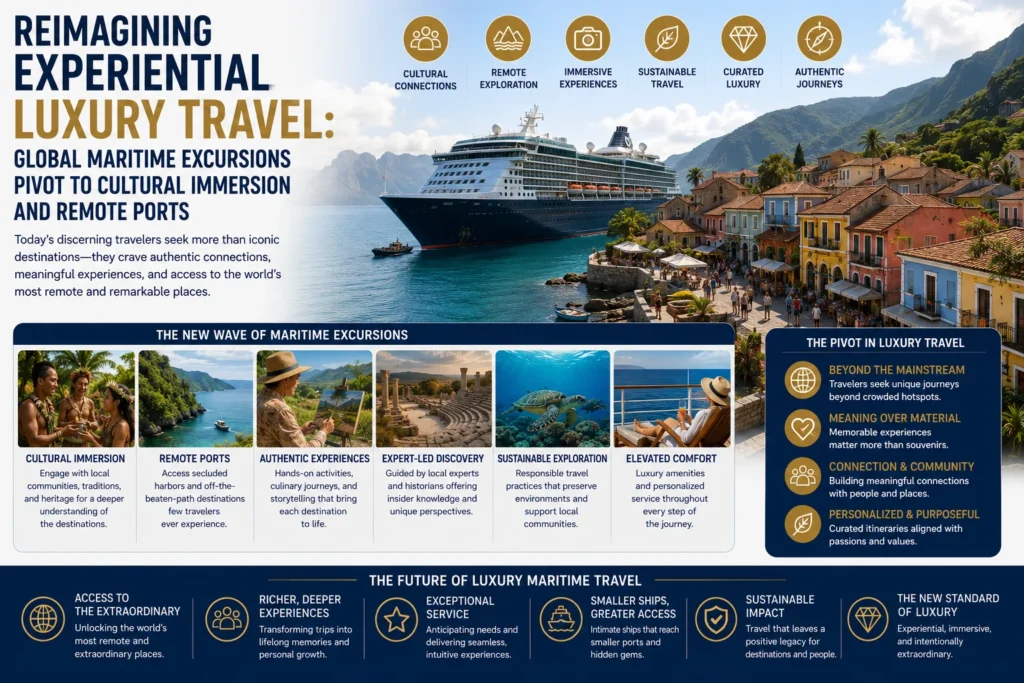
Global consumer spending within the premium vacation sector continues to reveal a profound structural shift toward slow travel and immersive regional discovery. Evolving travel analytics from international tourism ministries indicate that today’s luxury travelers are increasingly bypassing heavily congested landmarks in favor of remote coastal communities, authentic culinary traditions, and direct interactions with local heritage. As a direct response to these emerging preferences, ultra-luxury cruise lines are redesigning their fleet allocations and itinerary architectures to satisfy the growing global demand for deep, hyper-localized destination exploration.
According to comprehensive scheduling updates tracking global fleet deployments, the industry is witnessing the introduction of highly specialized, multi-continent voyage programs. This new phase of maritime planning targets boutique maritime entry points that are entirely unreachable by traditional large-scale passenger liners. This strategic pivot ensures that discerning travelers can systematically explore distinct regional micro-cultures while enjoying the comprehensive wellness and dining infrastructures provided by modern small-ship travel platforms.
A Massive Footprint Built Around Less-Frequented Global Coastlines
Official operational frameworks detailing long-term route planning highlight a massive global expansion program encompassing 278 distinct itineraries across 497 destinations worldwide. Spanning 71 independent sovereign nations, this carefully calibrated collection marks one of the most comprehensive developments in recent maritime hospitality history. A core element of this deployment involves the activation of more than 120 entirely new or reintroduced ports of call, allowing vessels to anchor in secluded coastal regions away from traditional tourism centers.
The structural rollout features a coordinated five-ship classic deployment framework engineered to balance major global cultural capitals with low-impact regional exploration. By utilizing highly specialized hull designs, these smaller vessels can easily navigate restricted coastal inlets, historic canals, and protected archipelagos. Travel research documents reveal that accessing these secondary and tertiary ports significantly benefits local island economies, distributing sustainable tourism spending across less-developed regional municipalities.
Record-Breaking Expedition Deployments Transform the Mediterranean Basin
The upcoming seasonal matrix is highlighted by an unprecedented expansion of dedicated expedition itineraries throughout the Mediterranean Sea. Rather than restricting passenger experiences to traditional Western European capitals, the new routing architecture establishes a highly technical network stretching across the Adriatic Sea, the Aegean Greek Isles, and less-frequented ports along the North African coast.
Key operational milestones integrated into the regional layout include:
Advanced Expedition Routing: Specialized hulls will routinely explore the unique geological formations and volcanic coastlines of islands like Milos, Amorgos, and Folegandros.
North African Immersion: The schedule introduces intensive shore exploration opportunities within cultural hubs across Algeria, including Algiers and Bejaia.
The Grand Voyage Matrix: A flagship 60-day autumn itinerary will systematically trace more than 50 distinct destinations across 13 countries, offering travelers an extended, continuous narrative of regional history.
Curated Sovereign Events: Port calls are structurally aligned with exclusive, high-value local events, including verified overnight stays in Italy providing curated spiritual and historical experiences in Rome during peak autumn months.
Inland Waterways and Reimagined Polar Aviation Infrastructure
A notable engineering and logistical highlight of the upcoming global season is the increased utilization of rare inland waterway navigation. Select itineraries feature specialized transits directly up the Guadalquivir River to Seville, Spain, bypassing standard industrial ports and allowing travelers to disembark directly within the historic core of Andalusian culture.
Concurrently, operators are expanding and refining advanced fly-cruise methodologies within the polar sectors to optimize guest transit comfort. By integrating luxury basecamp infrastructure in the southernmost reaches of Chilean Patagonia, travelers can now stay at premier eco-lodges in Puerto Williams before boarding private charter flights directly to King George Island in Antarctica. This innovative aviation bridge completely circumvents the notoriously rough maritime crossing of the Drake Passage, drastically reducing standard transit times and maximizing the active conservation and scientific exploration windows available within the fragile Antarctic ecosystem.
Cultural Synchronicity and the Expansion of Destination Culinary Programs
Modern experiential luxury travel relies heavily on alignment with native community calendars. The updated global deployment ensures that arrival times mirror significant regional occurrences, such as the high-energy summer Matsuri festivals across Japan, traditional Midsummer celebrations throughout Scandinavia, and the annual agricultural grape harvest cycles along Europe’s Atlantic coastline. By implementing more than 50 strategic overnight port stays, the schedule permits travelers to experience the evening economy, culinary nightlife, and distinct cultural transitions of these destinations after standard daytime tour crowds have dispersed.
This immersion is further supported by the expansion of dedicated destination-focused culinary programs. By integrating regional food procurement strategies into the onboard experience, the ships function as active extensions of the local landscape. Travelers participate in curated land-and-sea tasting programs that link shore excursions directly to domestic farmers, historical winemakers, and regional food artisans. Whether tracking ancient spice paths through Asia or exploring sustainable agriculture in the Caribbean, these programs offer an authentic window into the heritage of each community visited. As bookings prepare to open globally, this extensive maritime framework establishes a definitive roadmap for the future of highly personalized, low-impact global exploration.
For more travel news like this, keep reading Global Travel Wire