The financial parameters governing premium accommodation markets across the United Arab Emirates are undergoing a comprehensive operational recalibration. According to administrative summaries and city briefing updates released by the Dubai Department of Economy and Tourism (DET) in June 2026, the local hospitality ecosystem is adapting its pricing architecture to navigate short-term changes in international arrivals. By utilizing advanced global hospitality yield management systems, asset managers across the city’s 174 five-star establishments are systematically deploying premium domestic incentives, effectively capturing robust local demand to keep luxury infrastructure fully functional during temporary market corrections.
Official statistical indicators published by the DET show that Dubai’s travel infrastructure entered the 2026 calendar year on a historic trajectory, welcoming an unprecedented 19.59 million international overnight visitors over the previous twelve-month cycle. This baseline traffic supported a vast network of 647 hotel properties supplying a combined inventory of more than 129,500 premium keys. However, following short-term disruptions to cross-border flight corridors in late winter, international long-haul leisure bookings experienced a temporary correction. To prevent severe revenue leaks, luxury property operators quickly adjusted their pricing models, creating targeted resident staycation campaigns that feature strategic rate reductions of 40 to 60 percent.
Evaluating the Cyclical Occupancy Matrix: Weekend Influx vs. Midweek Valleys
The rapid deployment of these resident-only packages has generated a highly divided, bifurcated occupancy layout across the emirate’s coastal and beachfront luxury developments. Frontline property management reports indicate that the aggressive rate realignments have successfully unlocked substantial pent-up demand among local expatriate families and corporate residents who previously viewed premium seaside facilities as economically out of reach.
This demand correction has established two distinct operating phases within the weekly booking cycle:
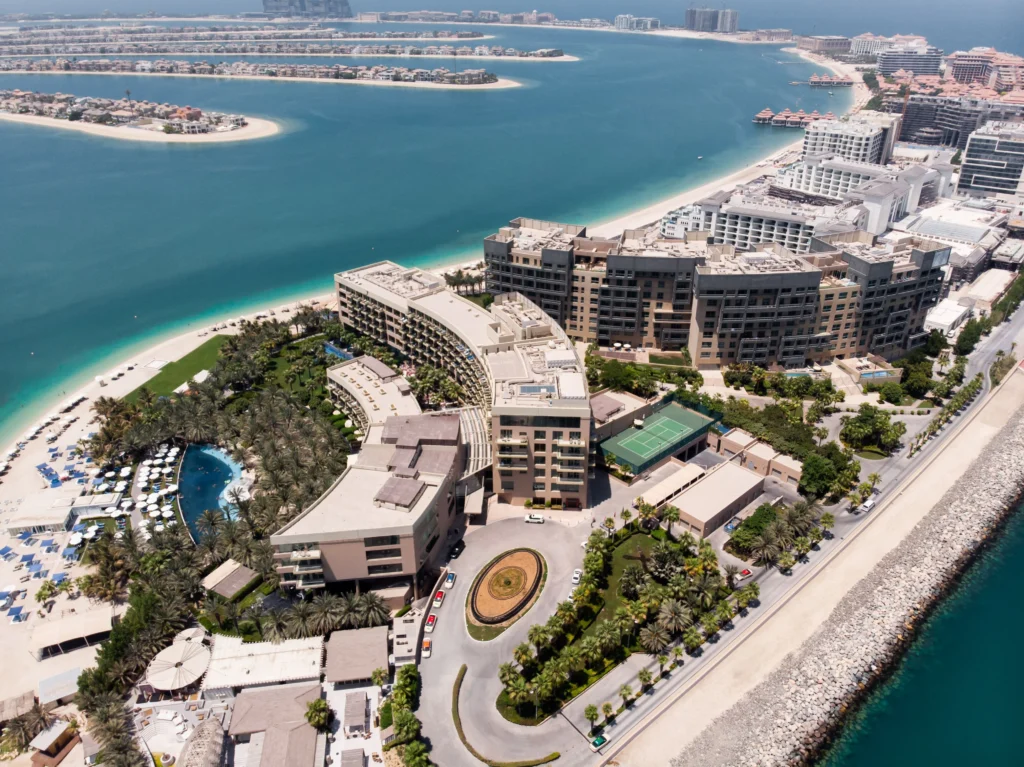
Weekend Performance Parameters (Friday and Saturday): Driven almost exclusively by regional staycationers, primary beachfront properties on the Palm Jumeirah and adjacent boardwalk zones report strong occupancy surges ranging between 70 and 90 percent.
Midweek Performance Parameters (Sunday through Thursday): International business transits and corporate groups reflect a quieter baseline, holding steady at approximately 20 to 30 percent capacity as global travel networks adjust to changing regional flight routes.
While midweek numbers remain subdued, the substantial cash flow generated during high-occupancy weekend surges allows luxury properties to maintain full baseline staffing structures, preserve specialized culinary and spa talent, and ensure that premium guest spaces remain fully operational.
Sustaining Capital Commitments and Civil Infrastructure Enhancements
To reinforce the long-term economic priorities established under the Dubai Economic Agenda D33—which aims to cement the city’s position among the top three global hubs for international commerce and leisure travel—municipal planning departments are moving ahead with major structural investments. Rather than scaling back public infrastructure budgets during a temporary decline in international traffic, state development ministries are expanding public transit networks and airport processing capabilities.
Official logistics briefs distributed during the recent DET City Briefing confirm that municipal engineering teams are fast-tracking core phases of the Al Maktoum International Airport expansion project alongside new urban metro extensions and advanced air taxi terminal stations. Senior development directors emphasized that there has been zero interruption to long-term civil construction. This ongoing infrastructure commitment ensures that the city’s primary entry points remain fully prepared to handle high-volume passenger surges once international routing grids return to standard capacity. Concurrently, several elite property boards are using this quieter period to implement comprehensive interior upgrades, allowing landmark towers to undergo deep structural refurbishments without causing operational friction or reducing guest satisfaction metrics during peak seasons.
Maximizing Mid-Year Momentum with Curated Retail and Entertainment Calendars
To support local businesses during the upcoming hot summer months—a period when many local residents traditionally travel outbound—the Dubai Festivals and Retail Establishment (DFRE) has completed the finalized rollout of its mid-year promotional calendar. The upcoming edition of the annual Dubai Summer Surprises activation will feature expanded retail initiatives, indoor entertainment programs, and value-added resort dining incentives.
To stimulate domestic consumer loops, the DFRE has introduced a new retail campaign allowing shoppers to enter weekly prize draws after a baseline expenditure of 500 Dirhams at participating retail hubs. By linking these widespread municipal campaigns with premium staycation promotions, destination management organizations are actively working to capture maximum domestic participation through the challenging mid-year months. While the industry remains focused on long-term international marketing campaigns, the present domestic optimization phase highlights the sheer adaptability of the modern hospitality network, proving that local demand can effectively support high-tier real estate assets during unexpected global shifts.
Essential Practical Advisory for Regional Staycation Commuters
As premium hospitality operators and municipal transport networks adjust their facility guidelines to accommodate expanding domestic staycation traffic, resident vacationers should follow organized planning habits to guarantee seamless getaways:
Verify Resident Credentials Prior to Arrival: Ensure valid national residency identification cards are presented digitally or physically at check-in desks to successfully activate exclusive localized tariff discounts.
Pre-Book Premium Recreation Amenities: Coordinate directly with resort concierge teams to lock in beach access, pool cabanas, and dining reservations 48 hours in advance, as high weekend domestic demand impacts peak-hour availability.
Monitor Public Transit Realignment Advisories: Track official Roads and Transport Authority bulletins to stay updated on seasonal schedule modifications across metro lines and marine transport channels.
Confirm Onsite Infrastructure Status: Connect with your selected resort property before checking in to verify the active operating hours of specialized kids’ clubs, wellness centers, and rooftop pools during scheduled off-season upgrade windows.
For more travel news like this, keep reading Global Travel Wire