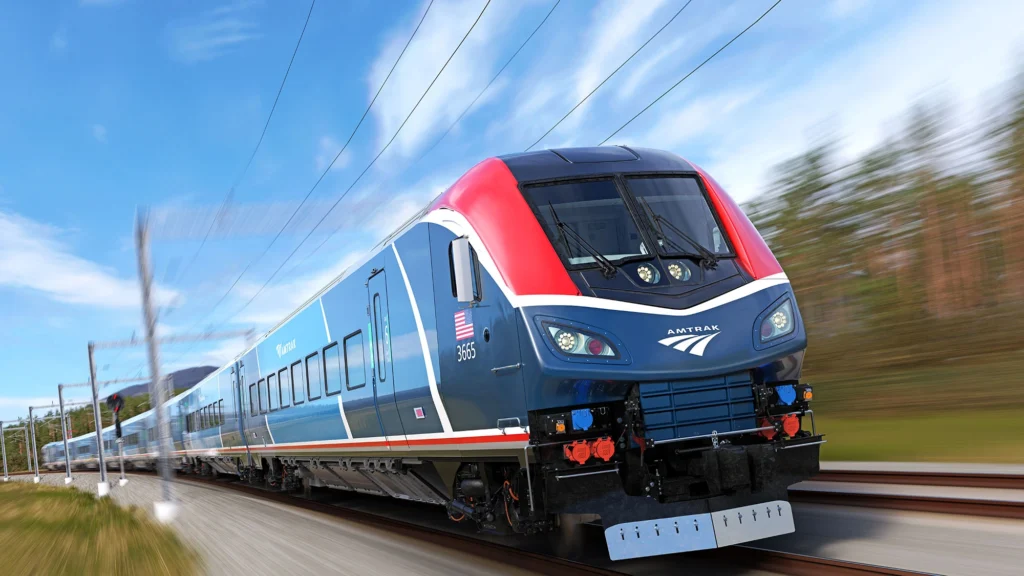
The United States passenger rail industry has reached an important milestone with the official acceptance of the first Amtrak Airo trainset, a development expected to reshape the future of rail travel across major corridors in North America. The newly accepted train has begun its cross-country movement from the Bear Maintenance Facility toward Seattle, where additional testing and operational preparations will take place before passenger service begins.
The milestone represents more than the delivery of a single train. It reflects a wider effort to modernize rail transportation in the United States and enhance passenger experiences at a time when countries across Europe and Asia continue investing heavily in next-generation train systems and upgraded travel infrastructure.
For travelers, the move signals a broader shift toward more efficient, comfortable, and technologically advanced rail journeys.
Cross-Country Journey Begins for New Fleet
Following its formal acceptance, the first Airo trainset has embarked on a long-distance journey across the country, beginning a critical stage in the deployment process.
The movement toward Seattle serves an operational purpose beyond transportation itself. The trainset is scheduled to undergo detailed testing and evaluation procedures designed to verify system performance, safety standards, and operational readiness across varying environments.
The United States presents unique testing requirements because passenger trains often operate across regions with significantly different terrain and weather conditions. Extensive validation ensures that new equipment can maintain consistent performance regardless of route conditions.
The journey also demonstrates the nationwide ambition of the Airo program. Rather than serving a single market, the trainset has been designed for widespread deployment across multiple passenger corridors.
Major Routes Set for Future Deployment
Once testing and certification stages are completed, Amtrak plans to introduce the new trainsets across several of its major services.
Planned operations include some of the country’s busiest and most recognizable routes, including Northeast Regional, Empire Service, Virginia Services, Keystone Service, Downeaster, Amtrak Cascades, Maple Leaf, New Haven/Springfield Service, Palmetto, Carolinian, Pennsylvanian, Vermonter, Ethan Allen Express, and Adirondack services.
The planned route expansion illustrates the strategic role the fleet will play within the national rail network.
The deployment covers heavily traveled metropolitan corridors as well as regional routes that connect smaller cities and communities. Improved network integration could create greater travel flexibility while supporting passenger growth across different markets.
Cross-border services such as the Maple Leaf route also highlight the increasing importance of rail cooperation between the United States and Canada, strengthening broader transportation connections across North America.
Passenger Comfort Takes Center Stage
The Airo trainset has been developed by Siemens Mobility with a strong focus on meeting changing passenger expectations.
Modern travelers increasingly prioritize comfort, convenience, and onboard experiences when selecting transportation options. The trainset incorporates upgraded features intended to improve journeys for both short and long-distance passengers.
Passengers can expect redesigned seating configurations intended to increase comfort during extended trips. Larger restroom facilities have also been integrated into the design, addressing practical needs frequently highlighted by travelers.
Food and beverage services have also received considerable attention.
The train introduces a redesigned onboard dining experience intended to provide greater convenience and a more enjoyable travel atmosphere. Enhanced onboard hospitality features reflect changing passenger preferences and align with broader trends seen in modern rail systems around the world.
Rail Modernization Supports Long-Term Goals
The acceptance of the first trainset forms part of a larger strategy aimed at improving rail infrastructure and increasing operational efficiency throughout the United States.
Modern rolling stock plays a critical role in improving service reliability and reducing long-term maintenance requirements. Newer train technology can support stronger operational performance while increasing flexibility across high-demand routes.
The introduction of upgraded equipment may also help expand passenger capacity and reduce congestion on key travel corridors where demand continues to increase.
Beyond operational improvements, investment in rail transportation also supports broader transportation and sustainability goals.
Rail systems continue to be viewed as an important alternative to road and air transportation due to their efficiency and potential environmental advantages. Increased rail usage could contribute to more sustainable mobility strategies while creating stronger transportation networks across regions.
A New Chapter for Passenger Rail Travel
As the first Amtrak Airo trainset moves through testing phases before entering public service, expectations surrounding the program continue to grow.
The train represents a new chapter for passenger rail travel in the United States, combining modern technology with enhanced passenger experiences and expanded network capabilities.
With broader route deployment planned and future fleet additions anticipated, the Amtrak Airo trainset could become a defining element in the evolution of North American rail travel, helping position the United States for a more connected and modern transportation future.
For more travel news like this, keep reading Global Travel Wire