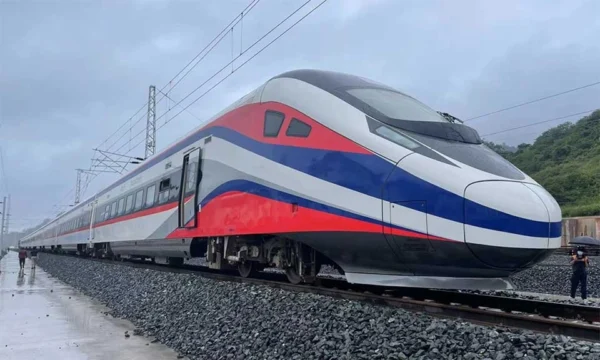
The China-Laos Railway is strengthening its position as one of Southeast Asia’s fastest-growing international tourism corridors, linking Kunming, Xishuangbanna, Luang Prabang and Vientiane through a more convenient cross-border rail journey. The expanding service is improving visitor access to major cultural destinations, heritage attractions and urban gateways across China and Laos while supporting a wider regional tourism economy.
The railway has handled 73.38 million passenger journeys since opening in December 2021, including more than 840,000 cross-border trips. Passenger demand has continued to rise in 2026. By late May, the route had carried 9.27 million passengers this year, an increase of 7.5% compared with the same period a year earlier. Cross-border passenger journeys reached 164,000, climbing 35.3%.
For travelers, the most important change is the growing ease of moving between destinations. Four international passenger trains now operate daily between Kunming and Vientiane. Cross-border seat capacity on each train has increased from 250 at the beginning of the international service to 420, while the fastest journey between Kunming South and Vientiane takes approximately nine hours and 36 minutes. Border clearance at the Mohan railway port has also been reduced to around 50 minutes.
Kunming and Vientiane Anchor Multi-Destination Journeys
The route is creating a practical framework for rail-based itineraries that combine southwestern China with Laos. Kunming serves as an important gateway to Yunnan Province, while Xishuangbanna offers access to tropical landscapes, local culture and cross-border tourism experiences. Further south, Luang Prabang remains one of Laos’ most prominent heritage destinations, and Vientiane provides a capital-city connection for visitors continuing their journeys through the country.
This combination gives travelers greater flexibility to build multi-stop holidays rather than relying on a single destination. Tour operators can package city stays, cultural attractions, food experiences and nature-based activities into one connected itinerary. Independent travelers also benefit from a clearer alternative to longer road journeys and more fragmented transport arrangements.
Rising Rail Demand Supports Hotels and Local Businesses
The impact extends beyond railway stations. Increased passenger flows are supporting demand for hotels, restaurants, attractions, retail businesses and local transport providers along the route. Tourism-related consumption in destinations served by the railway has grown by more than 35%, highlighting the wider economic influence of improved connectivity.
In 2025, the China-Laos Railway carried approximately 19.51 million passengers, reinforcing its importance as a regional transport link. Cross-border journeys reached approximately 282,000 during the year as international rail travel gained momentum. The corridor is now becoming increasingly relevant to hospitality businesses seeking to attract visitors who want convenient, experience-led travel across multiple destinations.
As rail frequency and capacity improve, hotels can benefit from longer stays and more varied arrival patterns. Restaurants, cultural venues and local tour operators also gain access to visitors who may previously have bypassed smaller destinations because of time constraints or complicated travel arrangements. That effect can spread tourism spending beyond major gateways and create opportunities for businesses in communities along the line.
Faster Border Processing Improves the Visitor Experience
Streamlined border procedures are a major part of the railway’s tourism appeal. A clearance process of around 50 minutes helps make the international train a more practical option for travelers who value reliability and comfort. The ability to depart in the morning and reach the destination within the same day supports shorter breaks as well as longer regional itineraries.
The railway also reflects growing traveler interest in rail journeys that combine transportation with destination discovery. Instead of treating the route as a simple transfer, visitors can use it as the backbone of a broader Southeast Asian holiday, connecting urban centers with heritage sites and scenic landscapes.
A Strategic Tourism Link for Southeast Asia
The China-Laos Railway is emerging as a powerful example of how modern transport infrastructure can reshape tourism demand. Its expanding international passenger service is helping China and Laos strengthen cultural exchange, improve destination accessibility and encourage visitor spending across the hospitality sector.
With passenger numbers rising, capacity increasing and border processing becoming more efficient, the corridor is positioned to play a growing role in regional tourism. For travelers, the appeal is straightforward: a faster, more comfortable and increasingly seamless way to explore some of the most distinctive destinations in China andLaos.
For more travel news like this, keep reading Global Travel Wire