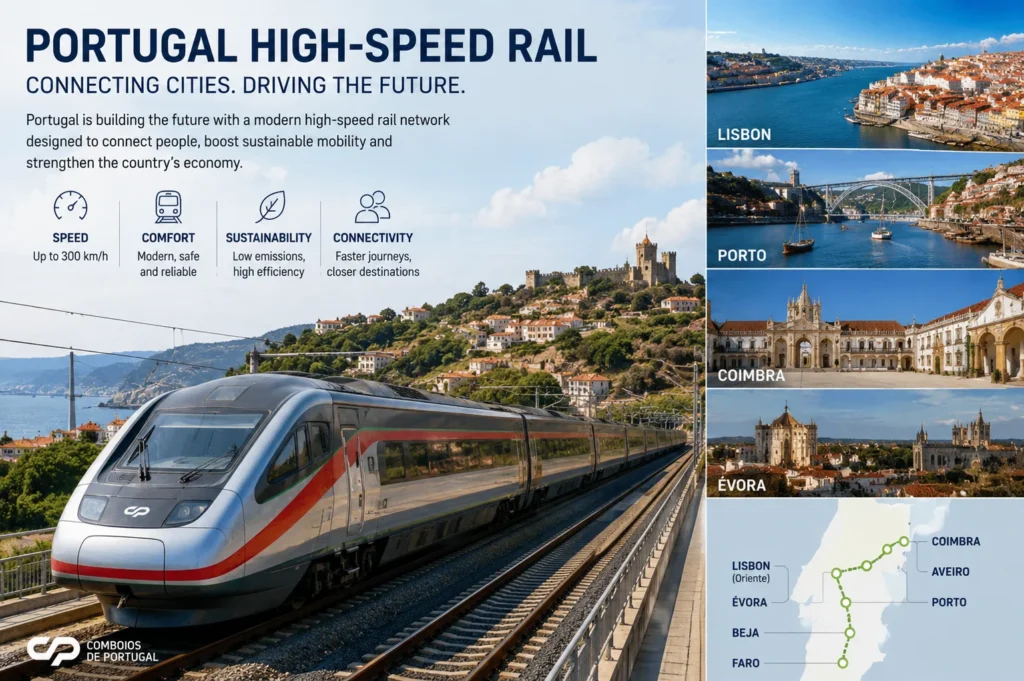
The infrastructure network across Southwestern Europe is preparing for a monumental upgrade that promises to completely alter regional passenger logistics and eco-conscious travel options. The state-owned national railway operator, Comboios de Portugal, has officially initiated an international public tender for the acquisition and long-term maintenance of its next-generation high-speed passenger fleet. Designed to operate primarily along the highly anticipated travel corridor connecting the capital city of Lisbon to the northern coastal hub of Porto, this development represents a major step forward in the country’s multi-billion-euro transport modernization strategy.
Public procurement documentation establishes a base contract price of €504 million for the manufacture and delivery of 12 high-speed trainsets, alongside an option to acquire up to eight additional units in later phases. The comprehensive contract framework is designed to integrate equipment procurement with long-term technical operations. The selected rolling stock manufacturer will be legally obligated to oversee full fleet maintenance for an initial 24 months following the delivery of the first operational unit, while simultaneously executing structured training programs for up to 50 national railway personnel to transition maintenance responsibilities seamlessly in-house.
Technical Engineering and the Modern Passenger Experience
To ensure full compatibility with existing regional infrastructure and upcoming trans-European corridors, the procurement rules mandate exceptionally precise engineering standards. The high-speed fleet will initially be constructed to match the standard 1,668 mm Iberian track gauge, allowing the trains to integrate smoothly with the country’s primary rail network. However, to guarantee long-term alignment with the wider Trans-European Transport Network, the specifications require that the rolling stock incorporate advanced wheelset replacement technology, enabling future adaptation to the 1,435 mm European standard gauge.
Operating at commercial speeds reaching up to 300 kilometers per hour, the new rolling stock will slash the travel time between the country’s two largest metropolitan hubs to just one hour and 15 minutes once the high-speed infrastructure is fully completed. Each train will feature an expansive interior layout capable of comfortably seating more than 500 passengers. To meet the high standards demanded by modern business and leisure travelers, the fleet will be equipped with premium onboard amenities, including integrated infotainment networks, high-speed Wi-Fi connectivity, universally accessible USB-C power sockets at every seat, specialized bicycle storage configurations, and continuous closed-circuit television security monitoring.
Strategic Implementation Timelines and Regulatory Milestones
The Ministry of Infrastructure and Housing has outlined a strict, phased evaluation schedule to ensure the program moves forward efficiently. National transport administrators will accept comprehensive technical and financial bids until July 2, with the official announcement of pre-qualified international candidates scheduled for mid-August. Following detailed negotiations, the formal contract signing is targeted for completion during the first quarter of 2027.
The production and deployment roadmap is carefully timed to align with the staggered completion of the underlying physical infrastructure:
First Quarter 2031: Delivery of the initial high-speed trainset to undergo rigorous safety testing and regulatory network authorization.
Monthly Fleet Rolldown: Subsequent units will be delivered at a steady rate of one train per month.
Third Quarter 2032: Full completion of the initial 12-train baseline order, allowing for maximum operational capacity.
This carefully planned delivery schedule ensures that the national rail operator will have a fully certified, high-capacity fleet ready for commercial deployment precisely as the first major section of the newly engineered Lisbon-Porto high-speed line becomes fully operational.
Fostering a Sustainable and Competitive Travel Market
The massive rollout of the Portugal high-speed rail fleet takes place within a broader domestic market shift toward full commercial liberalization. The state rail network will soon operate within a highly competitive passenger ecosystem, going head-to-head with private operators. To maximize consumer convenience, management is designing a comprehensive, multi-layered service model that smoothly blends the new high-speed corridors with traditional, slower conventional rail lines.
On an environmental level, this major shift in public transportation serves as a vital component of the country’s long-term sustainability goals. Public environmental impact projections indicate that shifting passenger traffic from regional domestic aviation and gridlocked highway corridors onto electrified high-speed rail networks will cut up to five million tonnes of carbon dioxide equivalents out of the atmosphere over the coming decades. By providing a faster, significantly more reliable, and completely carbon-efficient alternative to short-haul regional flights, the modern high-speed fleet ensures that the country remains a highly competitive, progressive, and deeply sustainable destination for global tourism.
For more travel news like this, keep reading Global Travel Wire