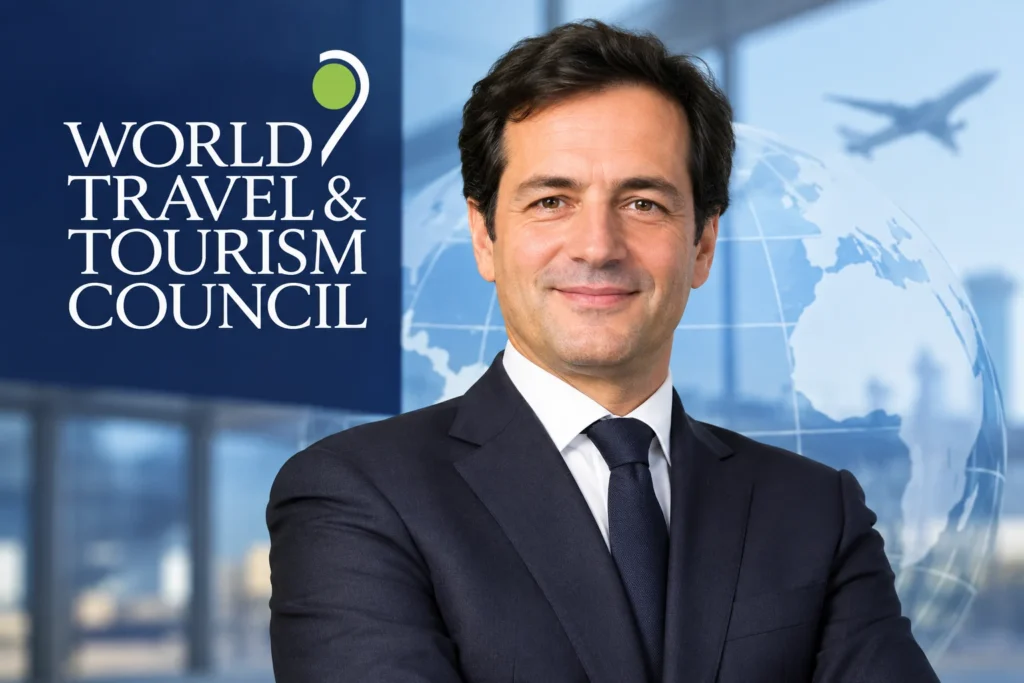
The global visitor economy operates as a complex ecosystem connecting distinct industries, from aviation and hospitality to travel distribution and infrastructure development. Bringing together the chief executive officers and leaders of these diverse interests, the World Travel & Tourism Council (WTTC) serves as the primary global authority representing the private sector of the travel and tourism industry.
In a significant leadership movement, WTTC has expanded its strategic direction by welcoming Bruno Despujol, Global Lead for Leisure & Hospitality at Oliver Wyman, to its Executive Committee. The appointment deepens an established, long-standing relationship between the global management consulting firm and the council, positioning cross-industry strategic advisory at the heart of global tourism governance.
Bridging Diverse Corporate Interests in the Visitor Economy
The World Travel & Tourism Council represents an unusually broad array of commercial enterprises. Its membership spans international hotel groups like Hilton, Accor, IHG, and Minor Hotels, alongside major cruise lines including Royal Caribbean and Carnival Corporation. Digital travel platforms such as Airbnb, Expedia Group, and Uber demonstrate how technological innovation continuously transforms transport and lodging, while major airport operators and global tourism investors shape physical infrastructure worldwide.
While these commercial segments share a collective dependency on a resilient global travel economy, their operating dynamics and strategic priorities frequently diverge:
Airlines and Transport: Focus on airport capacity efficiency, fuel economics, competitive operating margins, and network profitability.
Hospitality Sector: Prioritizes sustainable occupancy rates, distribution cost management, workforce development, and guest experience elevation.
Cruise Lines: Rely heavily on specialized port infrastructure, environmental compliance frameworks, and destination collaboration.
Digital Platforms: Concentrate on market acquisition, data analytics, software security, and streamlined booking integration.
Destination Operators: Seek a balanced equilibrium between economic revenue generation, community infrastructure limits, and long-term environmental protection.
Integrating management consulting expertise into the WTTC Executive Committee provides an analytical bridge across these varied models. Rather than reflecting the narrow commercial perspective of a single travel category, Oliver Wyman’s representation offers holistic economic insights into how decisions in one sector ripple across the entire travel chain.
Strategic Expertise from an International Consultancy
Headquartered in New York City, Oliver Wyman operates across North America, Europe, the Middle East, and Asia-Pacific as part of the Marsh McLennan professional services network. Founded in 1984, the firm advises global corporations, financial institutions, and public entities on corporate strategy, operational restructuring, digital transformation, risk management, and revenue optimization across multiple industries.
Within the travel and aviation sectors, the firm maintains an established public record of data-driven research and strategic analysis. A prominent example includes its annual Global Fleet and MRO Market Forecast, published in collaboration with industry bodies such as the Aeronautical Repair Station Association. The forecast serves as an essential analytical tool for airlines, manufacturers, and investors evaluating fleet expansion, aircraft availability, supply-chain logistics, and maintenance capital requirements.
According to long-term aviation projections, the global commercial aircraft fleet is expected to expand from approximately 30,000 aircraft in 2026 to over 41,000 aircraft by 2036. This research highlights the consultancy’s capacity to translate complex operational metrics into actionable data that corporate boards and public policy leaders can leverage when making long-range investment commitments.
Navigating Complex Global Challenges in Travel and Tourism
The appointment arrives at a crucial junction as the global visitor economy navigates structural and economic transitions. While international travel demand remains robust, operating businesses face multi-faceted headwinds:
In aviation, global supply chain bottlenecks, component availability constraints, shortages of specialized maintenance technicians, and rising operational costs continue to challenge scheduled capacity and fleet utilization. In hospitality and lodging, owners and operators confront escalating labor overhead, shifting traveler booking windows, rapid technology adoption requirements, and pressure to maintain profit margins without compromising service standards. At the same time, consulting firms themselves are continuously required to deliver quantifiable, practical improvements as corporate clients demand measurable returns on strategic investments.
By appointing Bruno Despujol to the WTTC Executive Committee, the council enhances its capacity to tackle these system-wide issues through grounded, data-backed policy recommendations and industry standards.
Official Welcoming from WTTC Leadership
WTTC President and CEO Gloria Guevara formally recognized the strengthened collaborative structure, emphasizing the strategic value that management consulting frameworks bring to the council’s overall mission.
Guevara noted that Oliver Wyman serves as a trusted advisor to leading travel and tourism organizations across the globe. She emphasized that Bruno Despujol’s expertise across hospitality, consumer trends, digital business transformation, and economic analysis will meaningfully support WTTC’s core mission of promoting sustainable, resilient, and inclusive growth across the international travel ecosystem.
Through this deepened alignment on the WTTC Executive Committee, Oliver Wyman and the council intend to help global private-sector travel leaders convert strategic foresight into operational resilience, ensuring the world’s tourism economy continues to drive employment, infrastructure investment, and sustainable economic development globally.
For more travel news like this, keep reading Global Travel Wire