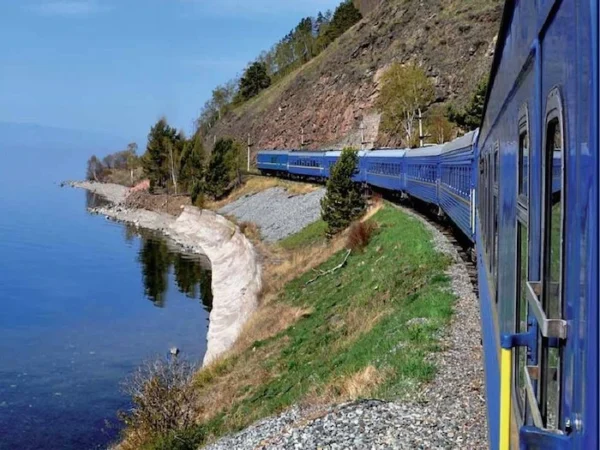
Russia and China are opening a new chapter in cross-border tourism with the trial operation of an international tourist train connecting Vladivostok with Suifenhe and extending travel opportunities toward Mudanjiang in northeast China.
The trial passenger operation, launched on July 17, 2026, creates a new tourism-focused connection between Russia’s Far East and China’s Heilongjiang Province. The initiative combines international rail mobility with destination experiences, giving travellers another way to explore cities, culture and landscapes on both sides of the border.
Rather than functioning only as transportation, the service is designed around an integrated tourism concept. Vladivostok, Suifenhe and Mudanjiang can form part of a wider multi-destination itinerary, creating opportunities for hotels, restaurants, attractions, retailers and local tourism businesses.
The development also highlights the growing importance of rail in regional tourism cooperation across Northeast Asia.
Vladivostok gains stronger tourism connectivity
Vladivostok provides a strategically important starting point for the new international journey.
Located on Russia’s Pacific coast, the city is a major economic, cultural and transport centre of the Russian Far East. It is also historically associated with long-distance rail travel as the eastern terminus of the Trans-Siberian Railway.
The new cross-border tourism connection expands Vladivostok’s potential role as a gateway between Russia and northeast China.
Visitors can combine the city’s waterfront setting, architectural heritage and urban attractions with an onward international rail journey, creating a more diversified regional itinerary.
For tourism planners, such connectivity can encourage travellers to spend additional time in gateway cities instead of treating them simply as transit points.
Suifenhe strengthens its border tourism role
Across the border, Suifenhe occupies an important position in China-Russia trade and passenger movement.
Located in Heilongjiang Province close to Russia, the city has developed a distinctive cross-border identity shaped by decades of commercial and cultural interaction.
The tourist train could strengthen this position by making Suifenhe part of a broader international visitor journey.
Travellers arriving by rail can explore local shopping, cuisine, architecture and cultural experiences before continuing deeper into Heilongjiang.
This creates opportunities for the city to transform border connectivity into longer visitor stays and greater tourism spending.
Mudanjiang expands the journey
Extending the tourism experience toward Mudanjiang significantly broadens the appeal of the corridor.
Instead of ending the journey immediately after crossing the international border, travellers can continue toward a larger regional destination with access to additional cultural and natural attractions.
This creates the potential for packaged itineraries combining multiple stops.
Visitors could experience Vladivostok before crossing into Suifenhe and then continue toward Mudanjiang and other destinations across Heilongjiang Province.
Such multi-stop journeys are particularly valuable for tourism because they distribute visitor spending across several communities rather than concentrating demand in one gateway.
Rail journey becomes part of the experience
One of the most important features of the new service is its tourism-oriented approach.
Modern travellers increasingly seek journeys that are memorable in themselves. Scenic trains, overnight services and international railway routes can turn transportation into part of the holiday experience.
The Russia-China tourist train fits this trend by combining cross-border movement with destination discovery.
Passengers can experience changing landscapes and cultures while moving between the Russian Far East and northeast China without relying exclusively on air travel.
Rail tourism can also appeal to travellers who prefer slower itineraries, allowing more time to understand regional geography, communities and culture.
Tourism businesses could gain new demand
Improved cross-border connectivity can create benefits far beyond railway stations.
Hotels may gain overnight guests before and after train journeys, while restaurants, tour operators, guides, retailers and attractions can benefit from additional visitor flows.
Suifenhe could particularly benefit from travellers stopping between Russia and destinations deeper inside China.
Meanwhile, Vladivostok could attract visitors who combine a Russian city break with a cross-border railway experience.
Mudanjiang could serve as a further distribution point for tourism across Heilongjiang, helping travellers discover more of northeast China.
Trial operation will shape future expansion
The trial phase will be important in determining how the service develops.
Passenger demand, border procedures, operating performance and the ability to create attractive tourism packages will all influence its longer-term potential.
A successful operation could support more regular services and encourage additional tourism cooperation between destinations on both sides of the border.
It could also demonstrate how international rail corridors can be developed not merely as transportation infrastructure but as complete tourism products.
New era for Northeast Asian rail travel
The Vladivostok-Suifenhe-Mudanjiang corridor represents a significant opportunity for regional tourism.
By connecting Russia’s Pacific gateway with important destinations in northeast China, the tourist train creates a new platform for cultural exchange, multi-destination holidays and local economic activity.
Its greatest potential lies in turning the border itself from a dividing line into part of the travel experience.
As the trial operation develops, the Russia-China tourist train could become a compelling example of how cross-border rail connectivity can reshape tourism, encourage longer journeys and introduce international travellers to destinations beyond traditional aviation gateways.
For more travel news like this, keep reading Global Travel Wire