Switzerland is placing historic rail travel firmly back in the tourism spotlight as the legendary Furka mountain railway marks a major 100-year milestone in 2026, highlighting a wider European revival of scenic trains, railway heritage and experience-led journeys.
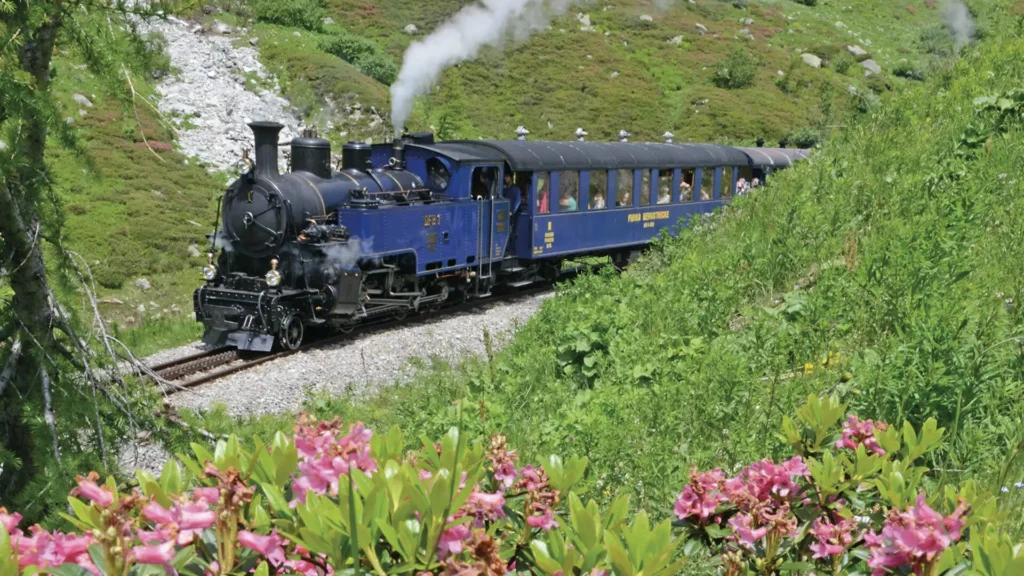
The centenary celebrates the historic Alpine rail connection between Oberwald and Realp, with special anniversary activities held from July 3 to 5, 2026. Today, the Furka Mountain Steam Railway carries visitors across roughly 18 kilometres between Realp in the canton of Uri and Oberwald in Valais, climbing through dramatic high-Alpine terrain above 2,000 metres.
Its comeback reflects something larger than nostalgia. Across Switzerland, Germany, Wales, Scotland, Austria and France, historic railway experiences are increasingly becoming tourism attractions in their own right.
For destinations, these journeys can encourage longer stays, strengthen rural tourism and connect visitors with landscapes that are often missed when travelling quickly between major cities.
Furka railway celebrates a century
The Furka story is especially powerful because the historic mountain route once faced an uncertain future.
After regular railway traffic shifted to the Furka Base Tunnel, preservation supporters worked to restore the old mountain line and protect its railway heritage. Volunteers remain central to the railway today, contributing extensive technical work to maintain infrastructure, locomotives and historic rolling stock.
That preservation effort has transformed the line into an immersive tourism experience.
Passengers travel between Realp and Oberwald through steep slopes, narrow gorges and high mountain scenery rather than simply using the railway for transportation. The journey makes the landscape itself part of the attraction.
The 2026 operating season runs from June 18 until September 27, reinforcing the railway’s importance as a seasonal Alpine tourism experience.
Germany keeps steam tourism alive
Switzerland is not alone in turning historic trains into powerful visitor experiences.
Germany’s Harz Narrow Gauge Railways offer another major example. The network stretches for more than 140 kilometres through the Harz region and includes the famous Brockenbahn, where steam locomotives carry passengers toward the Brocken summit.
The railway combines industrial heritage with forests, mountain scenery and outdoor tourism. For towns such as Wernigerode, heritage trains can also support accommodation, restaurants, walking tourism and other regional attractions.
This combination is increasingly important for smaller destinations seeking tourism experiences that cannot easily be replicated elsewhere.
Britain turns railway heritage into experiences
The United Kingdom also demonstrates the global appeal of historic rail travel.
In Wales, the Ffestiniog Railway has become closely associated with scenic journeys through the landscapes of North Wales. Historic locomotives, traditional railway engineering and mountain scenery create a travel experience where the journey is as important as the destination.
Scotland offers another powerful example through steam journeys linking Fort William with the west coast. Dramatic Highland landscapes and railway landmarks have helped make scenic rail travel a major part of the region’s tourism identity.
Such experiences appeal to railway enthusiasts, families, photographers and international visitors seeking slower and more memorable ways to explore destinations.
Alpine and coastal routes widen appeal
Austria and France show how heritage rail tourism can succeed across very different landscapes.
Austria’s historic Alpine rail experiences combine engineering heritage with mountains, lakes and established leisure destinations. They complement hiking, outdoor recreation and traditional village tourism while giving travellers another reason to explore regions beyond major urban centres.
In France, heritage railways around the Bay of Somme offer a contrasting experience. Instead of dramatic Alpine peaks, travellers encounter wetlands, coastal scenery and historic communities.
That diversity demonstrates why heritage rail tourism has such wide potential.
A historic train can become a gateway to mountains, national parks, coastal environments, cultural attractions or rural communities.
Slow travel creates new tourism opportunities
The revival also reflects changing travel priorities.
Many tourists increasingly value journeys that offer a stronger connection with landscape, history and local identity. Heritage trains fit naturally into this experience-focused form of tourism.
However, their sustainability value should be viewed broadly. Historic steam locomotives themselves are not automatically low-emission transportation.
Their wider tourism benefit comes from preserving existing infrastructure, encouraging rail-based itineraries, supporting regional economies and connecting heritage attractions with public transport networks.
This makes heritage rail especially valuable when travellers can combine modern trains with historic services instead of depending entirely on private vehicles.
Historic railways find a modern future
The Furka centenary shows how century-old infrastructure can gain new relevance when preservation, tourism and destination development work together.
Europe’s heritage railways are no longer simply museums in motion. They are becoming destination experiences capable of drawing visitors into mountain valleys, historic towns and rural landscapes.
Switzerland’s anniversary therefore represents more than one railway reaching 100 years.
It signals how historic transport can help shape the future of experiential tourism across Europe.
From the Furka mountains and Germany’s Harz region to Britain’s scenic railways and heritage routes in Austria and France, the new golden age of rail travel is being built around something modern tourism increasingly values: making the journey unforgettable.
For more travel news like this, keep reading Global Travel Wire