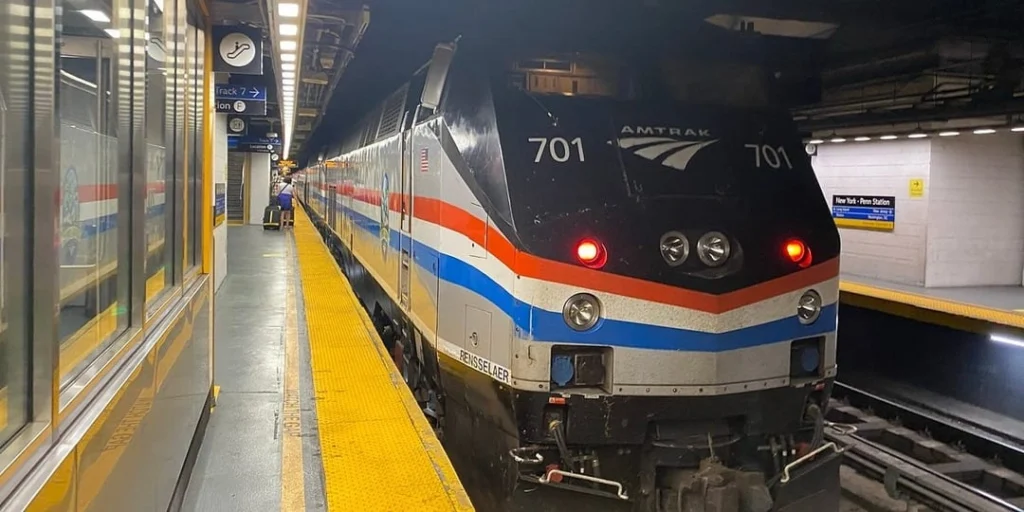
Travelers planning a journey between Toronto and New York City have a scenic alternative to flying: the Amtrak Maple Leaf train, a daily cross-border rail service linking two of North America’s most visited urban destinations.
The route offers a slower but more immersive travel experience, carrying passengers from Toronto Union Station to Moynihan Train Hall at New York Penn Station. Instead of moving through airports outside city centers, travelers arrive directly in Midtown Manhattan, close to hotels, restaurants, attractions and major subway connections.
For visitors who value scenery, comfort and the journey itself, the Maple Leaf provides a distinctive way to travel between Canada and the United States.
A Full-Day Journey Between Two Major Cities
The southbound Maple Leaf departs Toronto in the morning and reaches New York City in the evening. The current timetable places the journey at close to 13 hours, making it a full-day rail experience rather than a rapid intercity transfer.
While air travel remains faster for many passengers, the train offers advantages for travelers who prefer a relaxed pace. Passengers can remain seated for long stretches, move around the train, enjoy refreshments and watch landscapes change throughout the day.
The service is particularly appealing to leisure travelers who want transportation to become part of the itinerary. It also provides a practical option for visitors traveling with luggage, planning multi-stop journeys or seeking direct access to central Manhattan without an airport transfer.
Hudson River Valley and Niagara Falls Add Scenic Appeal
The Maple Leaf route is designed around some of the most recognizable landscapes in the region. Official route information highlights the Hudson River Valley, New York’s wine country and the dramatic gorges of the Finger Lakes region near Niagara Falls.
As the train travels south, passengers pass through communities including St. Catharines, Niagara Falls, Buffalo, Rochester, Syracuse, Albany-Rensselaer and several Hudson Valley stops before reaching New York City.
The later part of the journey provides some of the most memorable views. Between Albany and Manhattan, the route follows the Hudson River corridor, offering river scenery, wooded hillsides and waterfront towns. Seasonal changes can add further appeal, particularly during autumn foliage periods.
Niagara Falls also plays an important role in the journey. The train crosses the Canada-US border in the Niagara region, placing one of North America’s best-known natural attractions within the broader travel experience.
Border Procedures Require Advance Planning
Because the Maple Leaf is an international service, passengers must prepare for customs and immigration requirements.
Travelers should carry the original valid identification document selected during booking. Border inspections for Toronto services take place in Niagara Falls. Passengers are required to leave the train with their baggage, complete the inspection process and reboard the same service.
Travelers departing from Toronto are advised to arrive at the station at least 30 minutes before departure. Additional time may be needed for passengers who require more extensive immigration processing.
These procedures can extend the journey, so visitors should avoid planning tight onward connections after arrival in New York City.
Onboard Amenities Support a More Comfortable Trip
The Maple Leaf offers Coach Class and Business Class seating, along with onboard café service and Wi-Fi availability. Amenities can vary by train, but the service is structured to make the long journey more comfortable.
Business Class passengers receive additional benefits, including upgraded seating with footrests, complimentary non-alcoholic beverages and more flexible ticket conditions.
For leisure travelers, the ability to spend the day reading, working, resting or taking in the scenery can make the train an attractive alternative to the more fragmented airport experience.
Rail Tourism Gains Momentum Across the Region
The Maple Leaf also highlights the growing appeal of rail-based tourism. Travelers are increasingly interested in journeys that combine transportation with sightseeing, local access and a lower-stress travel rhythm.
For Toronto visitors heading to New York, the route offers a direct connection into Manhattan. For New York travelers heading north, it creates an opportunity to experience the Hudson Valley, upstate New York and southern Ontario in a single journey.
The train does not replace flying for every passenger. However, for travelers who value scenery, city-center convenience and a memorable cross-border experience, the Amtrak Maple Leaf turns a journey between Toronto and New York into part of the vacation itself.
For more travel news like this, keep reading Global Travel Wire