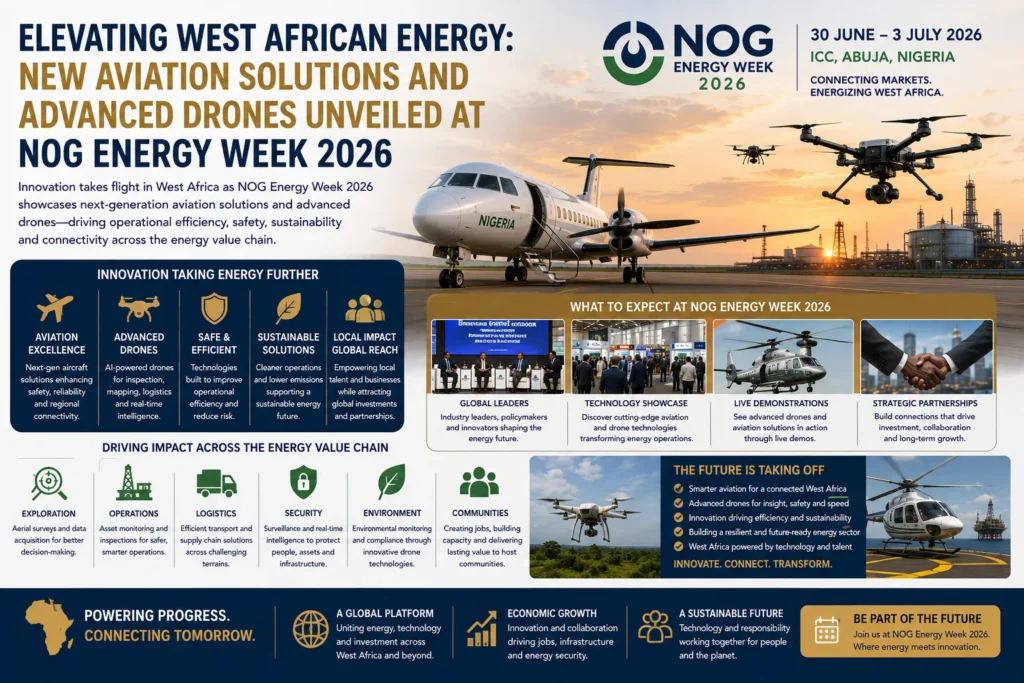
The West African energy and infrastructure landscape is experiencing a technologically driven overhaul, with advanced aerospace systems becoming central to corporate operations. Official frameworks released by regional bodies highlight that automated flight networks are no longer secondary options, serving instead as primary mechanisms for national industrial optimization. As international energy operators face rising asset integrity challenges, the deployment of intelligent aerial frameworks is helping to establish a safer, more cost-effective regional ecosystem.
A major milestone in this deployment is set for the upcoming 25th NOG Energy Week Conference and Exhibition, taking place from July 5 to 9, 2026, at the Bola Ahmed Tinubu International Conference Centre in Abuja. This milestone features a major public display by Flybird RPAS, the Remotely Piloted Aircraft Systems division of Flybird Group. The organization plans to showcase its advanced drone capabilities while detailing an aggressive expansion into integrated onshore and offshore aviation logistics across West Africa.
Streamlining Resource Management with Unmanned Aviation Technology
Modern energy operations are heavily dependent on immediate, precise structural data to manage immense infrastructure networks. Verified updates from national aviation regulators indicate that unmanned aviation technology has entered a phase of intensive commercial adoption, transforming traditional asset inspection processes. Rather than relying on high-risk physical manual checks, operators utilize high-capacity remotely piloted aircraft to gather real-time data across oil fields, mining installations, and maritime corridors.
The specialized applications displayed by the group focus on lowering operational costs and minimizing human exposure to hazardous high-risk zones, such as live gas flare stacks or complex offshore oil platforms. The systems are designed to provide localized operators with continuous aerial intelligence, facilitating rapid, data-backed decision-making. These smart systems align directly with the recent digital initiatives of the Nigeria Civil Aviation Authority, which launched an integrated national drone tracking portal in May 2026 to ensure that commercial drone operations adhere strictly to international safety and security benchmarks.
By integrating these technological platforms, indigenous firms are proving capable of delivering world-class aviation solutions that match global performance metrics. The systematic scaling of drone-based asset mapping satisfies a growing requirement within the regional energy value chain for precise data generation, supporting structural durability and preventive maintenance strategies.
Offshore Helicopter Logistics Expansion and Regional Integration
Beyond the immediate integration of unmanned vehicles, the long-term stabilization of the regional energy sector relies heavily on robust personnel transportation and emergency response capabilities. To bridge existing logistical gaps across West African offshore concessions, the aviation group is engaging stakeholders on its planned entry into specialized offshore helicopter operations.
This tactical expansion covers a highly diversified operational matrix, including:
High-frequency personnel transportation to remote offshore oil platforms.
Specialized logistics support for deep-sea exploration vessels.
Rapid-response emergency evacuation and search-and-rescue services.
Continuous aerial surveillance for maritime boundary and pipeline protection.
This deployment directly supports the group’s existing portfolio of corporate aircraft management, business aviation, and specialized aviation advisory services. By establishing a fully integrated aviation framework under a single corporate brand, the initiative addresses the growing need for specialized, reliable transport networks that can operate seamlessly within the demanding offshore environments of the Gulf of Guinea.
Fostering Local Capacity Development and Institutional Governance
The transition toward automated and localized aviation ecosystems is highly integrated with regional capacity-building mandates. Industry indicators show that Africa’s energy future depends heavily on strategic investments, local asset ownership, and strict corporate governance. NOG Energy Week provides a critical platform for public and private entities to move from policy discussion to active execution, establishing strategic partnerships that benefit regional content development.
Institutional updates from the group emphasize that building a fully integrated aviation ecosystem requires balancing operational excellence with strong internal compliance. By developing local technical capacity to manage, maintain, and overhaul both manned helicopter fleets and complex unmanned aircraft systems, regional providers elevate the economic autonomy of the West African energy supply chain.
As regulatory bodies across Africa continue to standardize frameworks for commercial drone integration and offshore flight paths, the demand for unified, certified aviation operators will continue to grow. Through the simultaneous rollout of high-capacity data drones for onshore infrastructure monitoring and the deployment of offshore helicopter logistics, the continuous expansion of modern unmanned aviation technology remains the foundational driver for the next generation of safe, resilient industrial operations across the continent.
For more travel news like this, keep reading Global Travel Wire