The international hospitality and travel sectors are entering a highly interconnected era where commercial technology applications directly influence visitor experiences. Official policy blueprints from regional tourism bureaus highlight that cross-border technology initiatives are no longer isolated corporate moves; instead, they serve as crucial pillars for national economic modernization. By infusing major investment capital into automated frameworks, data analytics, and digital networks, major business hubs are laying the foundation for a seamless, tech-driven travel environment.
According to research insights from the World Travel & Tourism Council (WTTC), the intersection of technological advancement and tourism policy has placed the Asia-Pacific region at the forefront of global travel growth. Projections indicate a 5.3% sector expansion throughout the year, driven heavily by smart tourism innovation that streamlines visitor movement and optimizes urban logistics. As corporate investment continues to shape broad market dynamics, specific technological movements are directly redefining how destinations manage infrastructure and engage international guests.
Digital Ecosystems and Automated Commerce in Urban Travel Hubs
The transformation of contemporary urban travel relies heavily on advanced consumer platforms and cloud-based transaction frameworks. Government-backed tourism agendas, such as Hong Kong’s freshly deployed “+Tourism” multiplier strategy, emphasize the deep integration of digital systems to elevate regional competitiveness. These public initiatives leverage existing commercial networks to deliver cashless transactions, automated itinerary management, and real-time localized service adjustments to visitors moving through dense commercial zones.
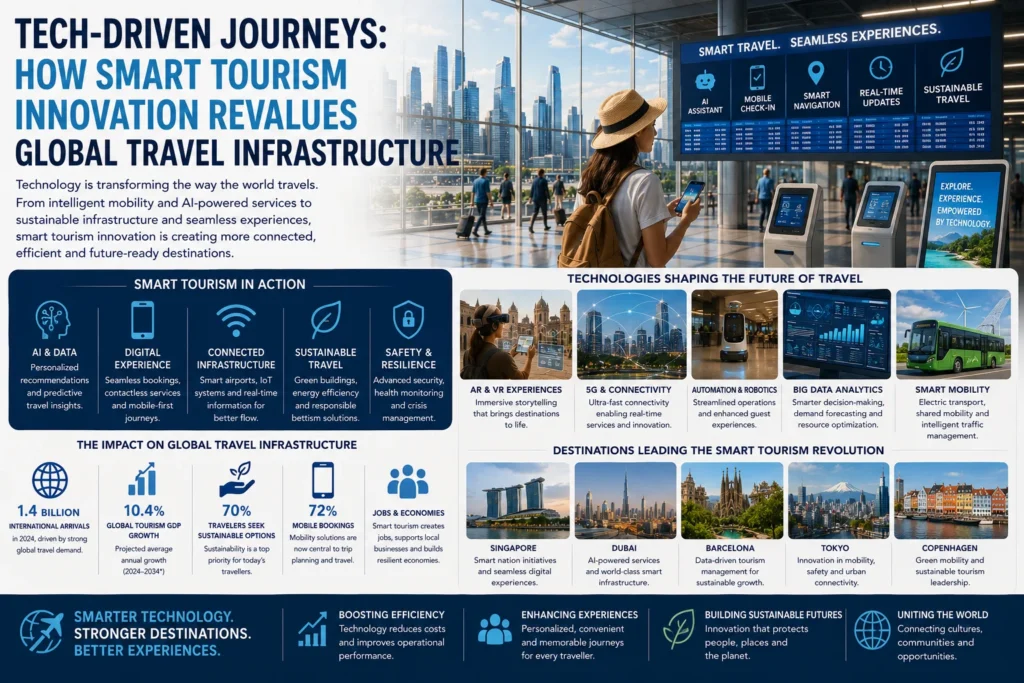
A critical asset in this ecosystem is the expansion of super-app networks and intelligent service applications. In large metropolitan areas, major digital platforms are scaling up their algorithmic capacities to handle massive tourist volumes. Data from national ministry statements demonstrates that mobile-first booking environments and integrated application ecosystems now command over 54% of all travel reservations. By connecting transportation logistics, hospitality check-ins, and automated food delivery systems under unified digital profiles, these platforms eliminate traditional language barriers and transaction friction for international arrivals.
Furthermore, substantial financial movements within the enterprise technology sector—such as high-value stock transactions and capital allocations in semiconductor and chip manufacturing—ensure the underlying processing power required to run complex, city-wide tourism networks. These technological backbones allow urban centers to manage real-time inventory pricing, monitor public transportation flow, and deploy responsive digital marketing campaigns that align with live occupancy trends across local hotel chains.
The Deployment of Autonomous Intelligence and Robotics in Service Channels
Beyond digital payment networks, the visible face of modern hospitality is being transformed by the deployment of deep tech and corporate robotics. The industrial training of advanced humanoid robots and autonomous delivery units represents a major step forward for service automation inside premium lodging spaces and high-volume transport terminals. These autonomous units are stepping into operational roles designed to minimize wait times and maximize service consistency.
Official development statistics from major tourism and hotel industry reports outline several key operational functions currently being assumed by autonomous systems:
Automated room service delivery managed by localized robotics networks.
AI-driven multilingual chatbots executing immediate digital check-in protocols.
Smart luggage routing systems utilizing biometric scanners at port entry points.
Integrated climate and lighting controls operating via IoT frameworks in premium suites.
The integration of these automated solutions directly addresses structural challenges within the global hospitality industry, particularly labor availability and rising operational overhead. By offloading routine physical logistics to intelligent automated platforms, hotel operators can redistribute human capital toward highly personalized guest relations and specialized concierge services, elevating overall customer satisfaction indexes.
Cross-Border Smart Infrastructure and Seamless Boundary Control
The true test of smart tourism innovation lies in its ability to facilitate fluid international transit across border control points. National administrations are actively deploying advanced technological infrastructure to support relaxed visa frameworks and visa-free transit zones. Verified border control updates show a significant reliance on biometric processing arrays, facial recognition entry gates, and synchronized digital custom forms to accelerate processing speeds at international gateways.
This technological synchronization is visible in the rapid development of multi-destination tourism zones, such as the Guangdong-Hong Kong-Macao Greater Bay Area. Here, cloud-connected transit systems and integrated high-speed rail software allow international business travelers and leisure tourists to navigate distinct regulatory jurisdictions with minimal physical documentation. This seamless connectivity changes regional travel pacing, making short-term, multi-city itineraries highly practical and encouraging extended stays across interconnected commercial corridors.
As international consumer groups—particularly tech-native younger demographics—continue to expand their footprints, the demand for instantly accessible digital travel tools will continue to rise. Through the continuous implementation of high-capacity data networks, autonomous service robotics, and integrated mobile transaction platforms, the ongoing expansion of smart tourism innovation remains the defining mechanism for future global hospitality growth.
For more travel news like this, keep reading Global Travel Wire