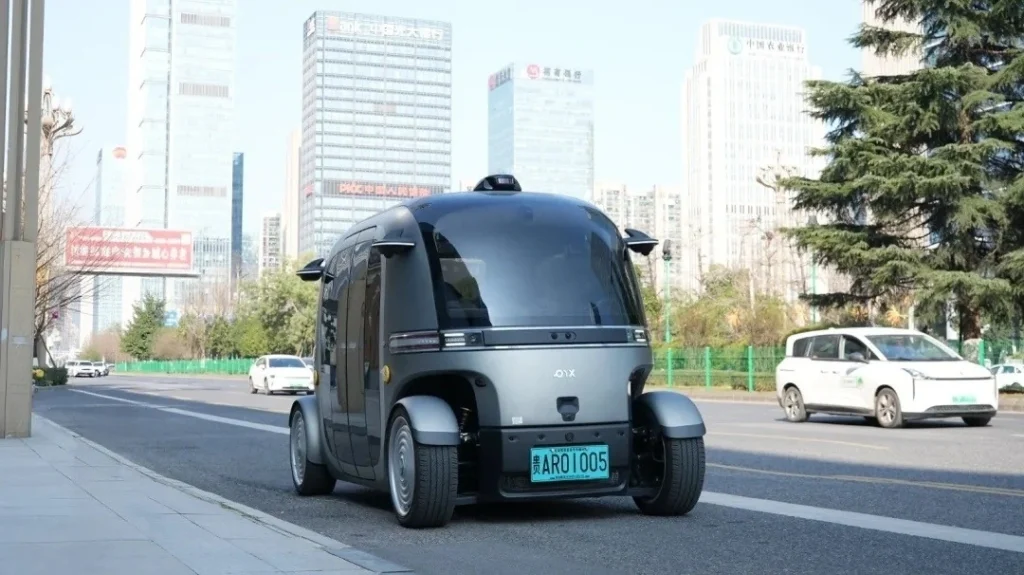
China has introduced a driverless electric minibus in Guiyang, offering residents and tourists a futuristic, safe, and environmentally friendly way to explore the city while highlighting the country’s rapid advances in smart mobility and sustainable urban transportation.
The autonomous vehicle, operating without a human driver, represents a major step in China’s broader push toward intelligent city infrastructure, low-emission transit systems, and technology-driven tourism experiences. Equipped with artificial intelligence, GPS navigation, LIDAR sensors, and high-resolution cameras, the electric minibus can independently detect traffic, pedestrians, cyclists, and road conditions while adjusting routes and speeds in real time.
City officials and tourism planners view the project as both a transportation innovation and a visitor attraction, positioning Guiyang as a leading smart city destination within China’s expanding urban mobility landscape.
Autonomous Technology Powers a New Urban Travel Experience
The driverless electric minibus operates using advanced autonomous navigation systems capable of safely maneuvering through busy city streets, intersections, and public spaces.
AI-powered onboard systems continuously analyze surrounding traffic conditions while GPS and sensor networks guide the vehicle along pre-programmed routes. High-definition cameras and LIDAR technology allow the bus to identify obstacles, monitor pedestrian movement, and react instantly to changing urban conditions.
The electric propulsion system also creates a quieter and smoother ride compared to traditional fuel-powered public transport, improving comfort for passengers while reducing environmental impact.
Transportation experts say autonomous public transit systems like Guiyang’s minibus could become increasingly important as cities worldwide search for cleaner, more efficient urban mobility solutions.
Tourists Turn Driverless Minibus Into a New Attraction
Although designed primarily for local public transportation, the autonomous minibus is quickly emerging as a unique tourism experience attracting tech-savvy travelers and visitors interested in futuristic transportation.
Tourists riding the vehicle can explore Guiyang’s streets, parks, shopping districts, and cultural areas while experiencing autonomous mobility technology firsthand. The route network connects several important city destinations, allowing passengers to combine sightseeing with convenient local transit.
Travel operators have already begun incorporating the driverless minibus into urban exploration packages and eco-tourism itineraries, promoting the experience as both a transportation service and a modern travel attraction.
Visitors are also using the rides to capture photos and videos documenting their experience inside a fully autonomous vehicle, further increasing the attraction’s visibility on social media and travel platforms.
Safety Systems Remain Central to Autonomous Operations
Safety remains one of the most closely monitored aspects of the driverless transport system.
The minibus network is supervised through a centralized monitoring control platform that allows human operators to intervene remotely if operational issues arise. Emergency response procedures and strict traffic compliance protocols have also been integrated into the system.
Dedicated autonomous transit lanes help separate the minibuses from conventional traffic in certain sections, reducing interaction risks involving cyclists, pedestrians, and private vehicles.
Passengers receive real-time route information and operational guidance through onboard AI assistants and digital displays designed to improve accessibility and traveler confidence.
Urban planners say the project demonstrates how autonomous transit can safely coexist within active city environments when combined with strong infrastructure management and oversight systems.
Guiyang Strengthens Position as a Smart City Innovation Hub
The autonomous minibus initiative is also contributing to Guiyang’s broader economic and technological development goals.
The project has generated new opportunities in AI monitoring, vehicle maintenance, digital infrastructure management, and smart transportation services. Local officials believe the initiative will attract additional investment from technology companies, mobility startups, and urban planning organizations interested in China’s rapidly evolving smart city ecosystem.
As more Chinese cities pursue advanced transportation systems, Guiyang is positioning itself as a model for mid-sized urban centers seeking sustainable growth through intelligent mobility infrastructure.
Industry analysts note that projects like this help strengthen China’s global image as a leader in autonomous transport innovation and urban technology deployment.
Sustainable Transportation Supports Environmental Goals
The electric minibus system aligns closely with China’s long-term sustainability objectives aimed at reducing urban pollution and carbon emissions.
Because the vehicle operates entirely on electricity, it produces zero direct emissions while helping reduce dependence on conventional fuel-powered buses and taxis. Autonomous route optimization also improves energy efficiency by minimizing unnecessary stops, congestion delays, and inefficient driving patterns.
Environmental experts say smart electric transit systems could play an important role in reducing air pollution in densely populated urban areas while improving overall transportation efficiency.
For travelers and residents alike, the quieter electric operation also creates a cleaner and more pleasant urban environment.
Autonomous Tourism Experiences Expected to Expand
Guiyang authorities have indicated plans to expand the autonomous minibus network into additional neighborhoods, commercial zones, and tourism districts in the coming years.
Transportation specialists predict that driverless buses could soon become a common feature in many mid-sized Chinese cities as autonomous technology becomes more affordable and operationally advanced.
The success of Guiyang’s program may also influence future tourism strategies worldwide as destinations increasingly combine technology, sustainability, and experiential travel into integrated visitor experiences.
For tourists, the driverless minibus offers more than transportation. It provides an opportunity to witness the future of urban mobility while exploring one of China’s emerging smart city destinations in a safe, convenient, and environmentally responsible way.
As autonomous transit continues evolving globally, Guiyang’s electric minibus initiative stands out as a powerful example of how modern transportation innovation can reshape tourism, sustainability, and everyday urban travel simultaneously.
For more travel news like this, keep reading Global Travel Wire