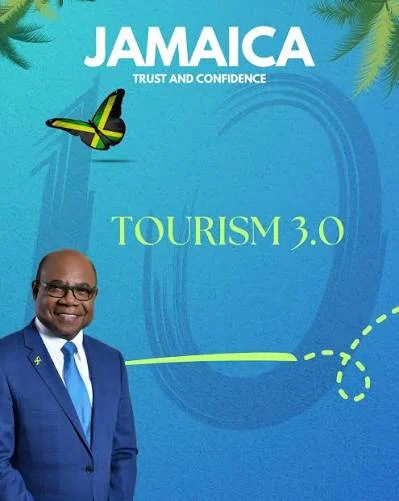
Jamaica is placing artificial intelligence, workforce development and local business participation at the centre of its Tourism 3.0 agenda. Tourism Awareness Week 2026 brings these priorities together through school activities, a youth forum and a hospitality technology workshop.
Running from 27 September to 3 October, the programme explores how digital tools can support tourism while preserving personal service. Its theme focuses on the digital agenda and artificial intelligence in redesigning tourism.
Tourism Minister Edmund Bartlett presents Tourism 3.0 as an approach to economic transformation, community value and sector resilience. The immediate emphasis combines industry discussion with opportunities for students and businesses to examine practical applications.
Human Hospitality Remains the Priority
Jamaica’s approach positions technology as a support for the people delivering the visitor experience. Director of Tourism Donovan White emphasises that artificial intelligence should complement human hospitality.
That distinction matters for a destination whose identity includes personal encounters and local culture. Digital efficiency needs to support the qualities travellers seek during their stay.
Potential applications include analysing information, improving marketing and assisting with routine operational tasks. Used effectively, these tools could allow employees to devote more attention to guests.
However, benefits depend on implementation and staff preparation. Introducing software alone does not establish better service, stronger employment outcomes or increased visitor spending.
Tourism Awareness Week Engages Students
The week began with a Thanksgiving Church Service at Faith Temple Assemblies of God in Montego Bay. The opening coincided with World Tourism Day on 27 September.
A Speaker Series followed at selected Tourism Action Club schools. Sessions scheduled for 28–29 September and 1–2 October connected students with tourism leaders, policymakers and technology specialists.
The Tourism AI Youth Forum formed another part of the programme on 30 September. Its activities included an AI Challenge and interactive exhibitions.
The youth programme encourages students to examine tourism problems and consider possible technological responses. It also introduces digital skills within the context of future hospitality careers.
Workshop Connects Technology With Business Needs
The Tourism Enhancement Fund scheduled its Hospitality & Tourism: AI in Tourism Workshop for 1 October. The event focused on technology and the future of work.
An Innovation Corridor brought together local and international technology companies showcasing solutions for tourism businesses. This format connected broader policy discussions with operational applications.
For accommodation providers and tour operators, useful questions include how a tool fits existing processes and what training employees require. Businesses also need to understand costs and ongoing support.
The programme’s educational value lies in helping participants assess those choices. Demonstrations should inform adoption decisions rather than substitute for evaluating a business’s specific needs.
Small Enterprises Need Accessible Digital Support
Jamaica’s wider agenda identifies AI clinics for micro, small and medium-sized tourism enterprises as an area of support. These activities focus on understanding automation and business applications.
Possible uses include customer communication, inventory management and organising customer information. For smaller operators, manageable tools may offer a practical starting point.
Digital visibility also matters for businesses outside major hotel groups. Clear online information can help travellers discover local accommodation, activities and services.
Nevertheless, smaller enterprises need support suited to their resources. Training and realistic implementation plans are central to ensuring they can participate in the digital agenda.
Caribbean Initiatives Emphasise Practical Skills
The wider Caribbean discussion similarly places workforce capability alongside technological development. Regional initiatives described in the programme include worker-focused guidance and practical tourism bootcamps.
The Caribbean Tourism Organization’s approach encourages professionals to learn, build, share and implement digital products. This places an emphasis on applying knowledge within participating organisations.
For hospitality workers, practical learning can make unfamiliar technology easier to assess. It can also help teams identify tasks where digital assistance would be useful.
Such initiatives support the discussion around AI adoption. Their results still require assessment through service improvements, staff experience and effective business use.
Americas Comparisons Require Clear Distinctions
The broader Americas context includes consumer travel planning, business digitalisation and large-scale technology infrastructure. Brazil, Chile and Uruguay feature in discussions about regional AI development.
However, national AI capability does not automatically establish tourism-specific deployment. Similarly, using digital planning tools does not independently prove increased travel frequency.
Jamaica’s immediate contribution is its defined Tourism Awareness Week programme and stated Tourism 3.0 priorities. These provide a clearer basis for examining its direction.
For tourism businesses, the next step is translating discussion into suitable tools, trained teams and measurable improvements. For travellers, success would mean accessible information and smoother services alongside the personal hospitality that gives Jamaica its distinctive appeal.
For more travel news like this, keep reading Global Travel Wire