The structural framework of the Gulf Cooperation Council (GCC) corporate hospitality and corporate transit market is experiencing rapid tech-driven integration. Perk, an artificial intelligence-native software platform specialized in travel logistics and spend management optimization, has officially announced the opening of its permanent regional headquarters. Located within Abu Dhabi Global Market (ADGM), the international financial center of the emirate, the expansion has been formalized through a strategic partnership with the Abu Dhabi Investment Office (ADIO).
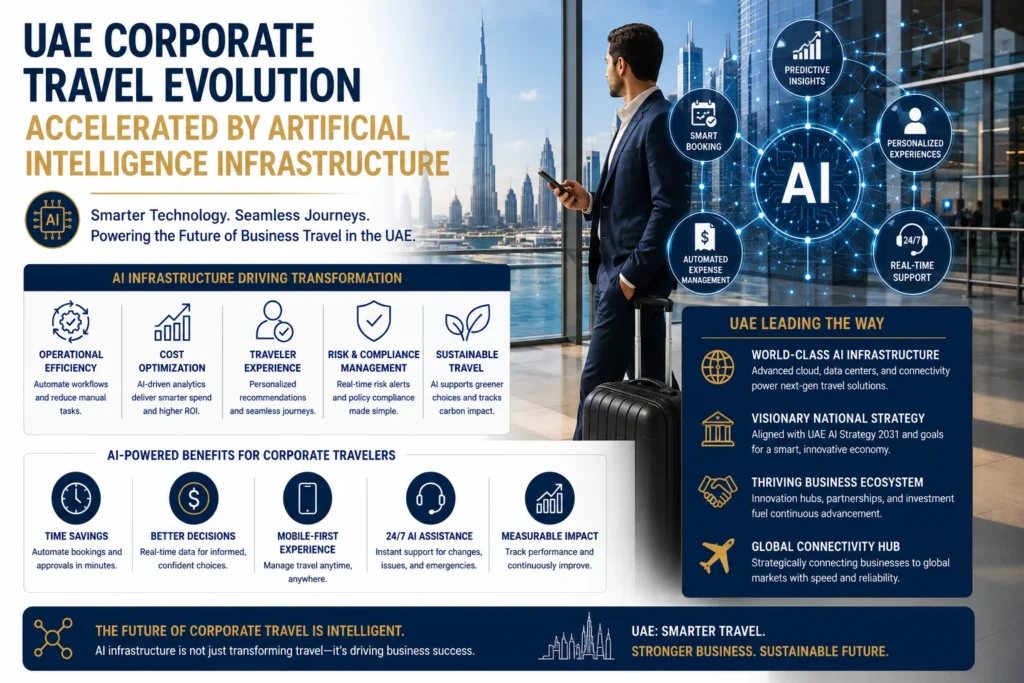
This targeted cross-border expansion aligns with state-level socioeconomic initiatives designed to position the region as a primary center for globally scalable digital operations. Official policy outlines published under the UAE National Strategy for Artificial Intelligence 2031 state that the country aims for advanced cognitive computing technologies to contribute 20% of the territory’s non-oil Gross Domestic Product (GDP) over the coming decade. By embedding specialized automation software directly into regional business networks, the partnership provides a technical foundation to support automated business mobility workflows.
Expanding Corporate Pipelines and Addressing Unserved Segments
The formalization of a physical footprint in Abu Dhabi addresses a substantial financial volume within the regional travel ecosystem. Official tourism board assessments and regional trade projections indicate that the UAE corporate travel market size is on a trajectory to reach an estimated $94 billion by 2030. Despite this high transaction volume, small-to-medium enterprises (SMEs) and mid-market organizations have historically remained underserved by unified, modern accounting and booking systems.
The regional deployment aims to directly bridge this infrastructure gap, with operational targets projecting a tripling of business travel transaction volume routed through local corporate customers by 2028. State economic diversification guidelines emphasize that optimizing corporate travel logistics helps localized enterprises control operational overhead. The integration of unified software platforms removes the administrative bottlenecks associated with multi-platform reporting, giving businesses better control over cross-border travel expenditures.
Regional Demand Validates Institutional Scale and Revenue Velocity
The deployment follows several years of steady data validation within the local marketplace. Corporate analytics disclose that the country has actively generated substantial transaction volume for the provider since initial pilot explorations began in 2021. Currently, the territory ranks as the organization’s ninth-largest global market by aggregate travel spend. This strong regional demand underpins a wider global corporate growth rate of 48% recorded during the previous fiscal year, pushing the platform’s annualized revenue toward the $400 million threshold.
Official investment statements from ADIO emphasize that the integration of artificial intelligence into travel tech represents a critical sub-sector of the emirate’s broader mobility and corporate services strategy. By cultivating a regulatory environment tailored for high-growth tech platforms, the regional administration aims to provide international enterprises with the necessary operational stability to deploy complex automation tools. The presence of a localized base allows technical teams to build direct compliance workflows that conform precisely to regional tax systems and corporate reporting protocols.
Mitigating Operational Productivity Losses in Professional Travel
The core architecture of modern travel management platforms targets the elimination of repetitive administrative tasks, often categorized by operations experts as hidden manual workload. Internal productivity research reveals that standard manual travel booking, fragmented expense tracking, and physical invoice processing drain up to seven hours of productivity per employee each week. On a global scale, this systemic administrative friction accounts for massive losses in corporate efficiency.
By implementing an automated, system-wide approach, corporate travel platforms combine flights, accommodations, train transit, and vehicle logistics into a centralized digital itinerary. Simultaneously, integrated corporate payment cards allow for real-time compliance enforcement. Employees can capture digital images of receipts on the go, allowing automated algorithms to match transactions instantly, verify policy compliance, and route financial data directly to accounting systems without clerical intervention.
Future Outlook for AI-Native Corporate Travel Networks
As the wider GCC market experiences historic investments in physical hospitality assets, aviation networks, and business convention infrastructure, the back-office systems supporting these movements must evolve at a matching pace. National economic reports indicate that the modern travel landscape requires high adaptability, where corporate travel guidelines must be dynamically adjusted to reflect safety parameters, fluctuating carrier rates, and strict corporate governance targets.
The collaboration between specialized software developers and state development entities like the Abu Dhabi Investment Office demonstrates a forward-looking approach to regional travel infrastructure. By transitioning from legacy transaction platforms to responsive, predictive ecosystems, the regional marketplace is establishing a highly optimized template for institutional travel coordination. This continuous digitization ensures that regional enterprises can navigate complex international travel demands with absolute budget visibility, strong data protection, and minimal administrative friction.
For more travel news like this, keep reading Global Travel Wire