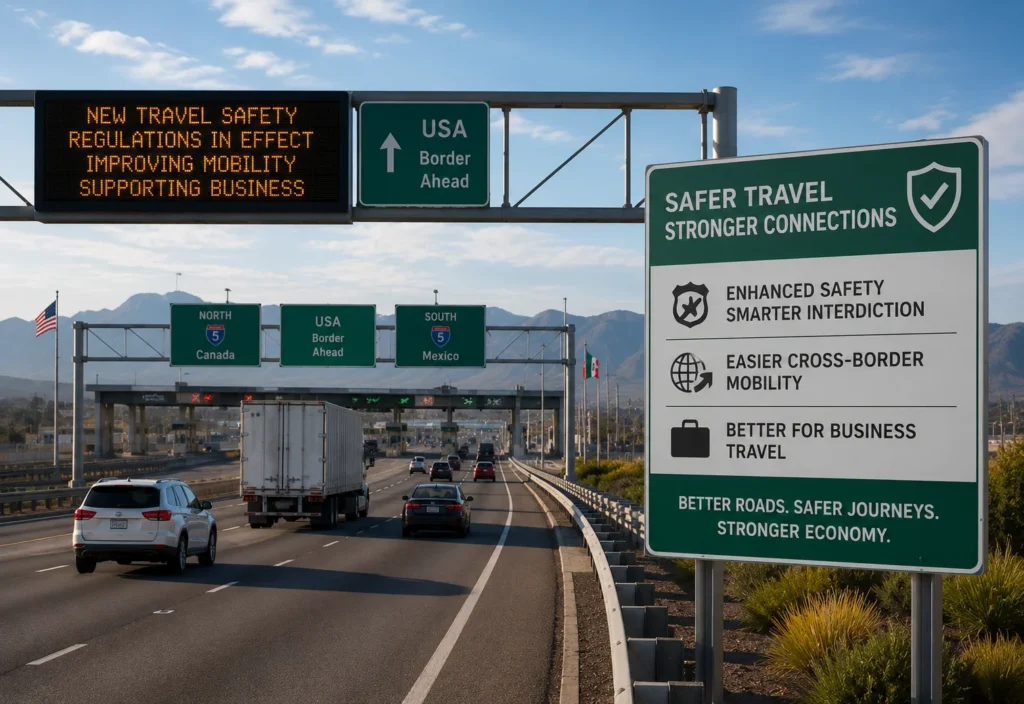
A major policy shift within federal interior enforcement has set off positive ripples across the domestic travel and hospitality sectors. The Department of Homeland Security has officially issued a directive to freeze pre-textual vehicle stops across the country. This immediate suspension applies to specialized field operations and general enforcement teams, shifting the federal focus away from roadside stops while the agency performs a comprehensive review of operational safety guidelines.
For the tourism and hospitality industries, this decision marks a turning point for cross-border mobility and regional travel confidence. Over the years, roadside checks have accounted for roughly 7 percent of standard interior enforcement encounters, a practice that frequently created anxiety among diverse traveler groups. By pausing these unpredictable roadside checks, federal authorities are creating a more welcoming environment for domestic road trips, interstate corporate transit, and regional leisure travel.
Enhancing Roadside Confidence for the Rental Car and Chauffeured Transit Sectors
The immediate impact of these updated travel safety regulations will be felt strongly across the ground transportation ecosystem, particularly by rental car companies, regional shuttle operators, and corporate chauffeur services. Previously, unpredictable roadside questioning caused significant stress for long-distance commuters and international business travelers driving rented vehicles across state lines. The risk of being delayed by federal enforcement during routine journeys occasionally discouraged companies from approving out-of-state road travel for their international workforce.
With this new directive in place, corporate logistics managers can plan regional routes with greater certainty. Professional drivers and traveling employees can navigate interstate highway networks without the fear of unscheduled federal traffic stops. This shift is expected to increase demand for long-distance rental cars and private black-car services, particularly along busy commercial corridors that connect major industrial and financial hubs.
Boosting Regional Leisure Tourism and Holiday Road Trips
Beyond corporate transit, the suspension of vehicle stops provides a significant boost to regional leisure tourism. Tourism boards have frequently noted that travel confidence is a primary driver of consumer spending in the hospitality sector. When families feel secure navigating highway networks, they are far more likely to plan multi-day road trips, visit national parks, and support rural hospitality businesses.
Past statistics indicate that aggressive roadside enforcement often had a chilling effect on travel, causing mixed-status households and international visitors to skip long-distance road trips entirely. This pullback primarily harmed regional hospitality ecosystems, including roadside motels, independent restaurants, and cultural heritage sites that rely heavily on drive-in visitors. By establishing clear and uniform national standards that limit roadside immigration checks, federal authorities are removing a major psychological barrier to travel, allowing families to explore the country with renewed peace of mind.
Corporate Workforces Pivot to Workplace Compliance Practices
While the threat of roadside encounters has decreased, human resource managers and corporate travel coordinators must remain focused on workplace compliance. Legal experts emphasize that the reduction in highway patrols will likely result in a stronger federal focus on intelligence-driven investigations and administrative audits, such as Form I-9 inspections.
Organizations that employ highly mobile workforces—such as those in construction, logistics, event management, and field services—should update their internal compliance protocols to reflect this shift. While traveling staff face a much lower probability of experiencing traffic stops during business trips, corporate headquarters must maintain meticulous record-keeping to withstand routine corporate audits. Transitioning to centralized digital verification systems ensures that businesses remain fully compliant with federal standards while their employees travel freely between regional job sites.
Shifting Focus to High-Yield, Infrastructure-Driven Security
This tactical adjustment highlights a broader alignment within the Department of Homeland Security toward intelligence-led enforcement models rather than broad, resource-intensive highway monitoring. Federal officials insist that this operational review is designed to balance public safety with civil liberties, building a standardized framework that protects both enforcement personnel and the traveling public.
By moving enforcement away from unpredictable highway environments, federal agencies can better protect public safety while minimizing disruptions to commerce and tourism. Maintaining open, accessible transit networks is essential for supporting the ongoing recovery of the domestic travel sector. As long-distance travel numbers rise, keeping highways clear of non-traffic delays ensures that the transport infrastructure can efficiently handle record volumes of vacationers and business commuters alike.
Looking ahead, the hospitality and tourism sectors are well-positioned to capitalize on this improved regulatory environment. With clearer transit guidelines and reduced friction on the nation’s highways, the industry can expect steady growth in cross-border mobility, corporate transit bookings, and regional road trip tourism throughout the year.
For more travel news like this, keep reading Global Travel Wire