Global mobility indices tracking international travel access and sovereign border policies indicate that holders of ordinary Ethiopian travel documents currently enjoy complete visa exemptions across seventeen sovereign destinations worldwide. Consolidated comparative assessments published in international consular tracking registers place the travel document at ninetieth position overall within international mobility indices, reflecting evolving bilateral travel agreements, reciprocal entry arrangements, and multilateral diplomatic dialogues across regional and continental partner states.
In addition to the destinations that permit immediate entry without prior consular clearances, standard immigration frameworks across thirty-three international jurisdictions grant Ethiopian citizens entry clearance upon arrival at designated border checkpoints or through expedited electronic verification terminals. These coordinated entry mechanisms illustrate how bilateral arrangements, regional integration pacts, and international migration cooperation continue to define cross-border movement across emerging economies.
Continental Integration and Regional Reciprocity Across Africa
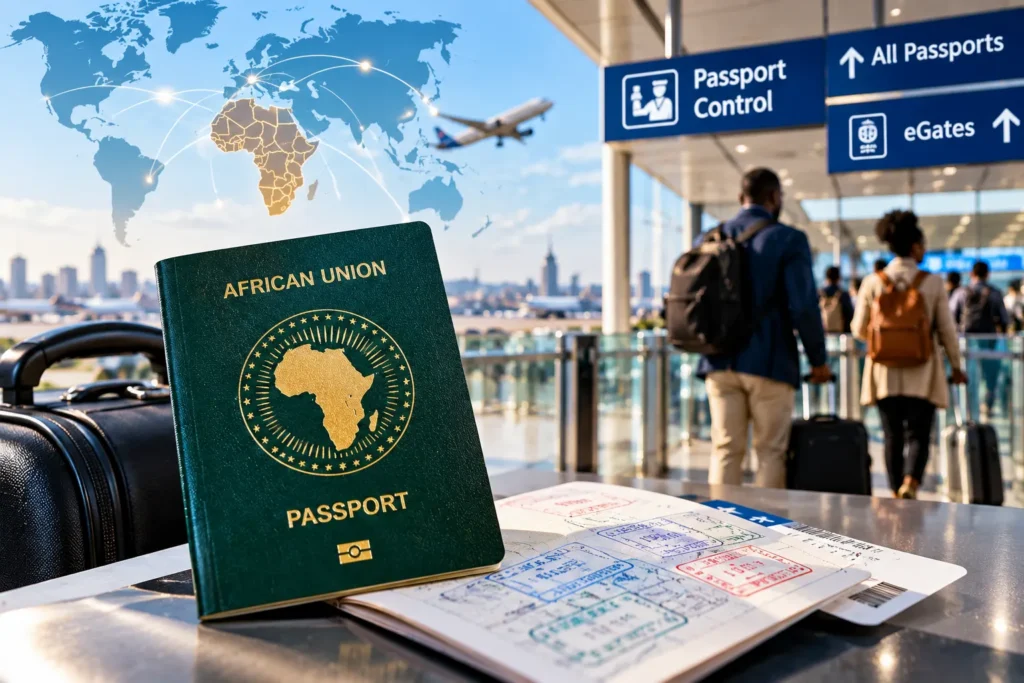
Within the framework of continental integration championed under African Union developmental agendas, sovereign members have progressively pursued cross-border travel facilitation to stimulate commercial interaction and regional tourism. Under current immigration regulations implemented among African Union member states, full visa-free exemptions for visiting Ethiopian nationals are operational across five partner countries: Kenya, Benin, The Gambia, Rwanda, and Togo.
National immigration departments and border control authorities in these partner jurisdictions have highlighted that mutual entry relaxations serve as an effective mechanism to facilitate intra-continental commerce, academic exchange, and leisure tourism. For instance, reciprocal agreements established across East African corridors emphasize seamless surface and aviation transit, reducing administrative wait times for business delegates and regional holidaymakers.
Simultaneously, sovereign destinations offering visa-on-arrival facilities allow arriving passengers to settle entry verification protocols directly upon landing at primary air gateways and maritime ports. Travel facilitation bodies emphasize that these mechanisms represent a pragmatic middle ground, maintaining sovereign border integrity while reducing the consular bottlenecks traditionally associated with advance embassy visa processing.
Bilateral Negotiations and Consular Alignment
Consular authorities and diplomatic analysts emphasize that the global placement of a national passport reflects broader macroeconomic conditions, security coordination, and formal diplomatic agreements. International entry policies are built largely on reciprocity, wherein countries negotiate visa waivers through mutual bilateral accords. When administrative barriers or socioeconomic disparities limit the pace of reciprocal visa-waiver negotiations, travel documents experience constrained mobility scores across international rankings.
Government foreign affairs releases indicate that developing nations actively engage in bilateral consultations to expand the scope of diplomatic and ordinary passport privileges. Bilateral economic commissions and intergovernmental joint forums frequently address visa facilitation as an essential step toward unlocking foreign investment, technical cooperation, and cultural connectivity.
Official statements from ministerial trade representatives consistently underline that simplified travel protocols are indispensable for supporting domestic enterprise abroad. When corporate executives, independent entrepreneurs, and academic researchers encounter lengthy consular procedures, international business development and educational collaboration face administrative frictions. Conversely, open corridors enhance cross-border mobility, empowering regional commercial operators to establish international supply networks and attend multilateral trade expositions.
Digital Border Modernisation and Tourism Infrastructure
While outbound travel for passport holders continues to navigate international consular requirements, domestic border administration has increasingly embraced digital transformation to welcome incoming international travelers. Official public statements from national immigration and civil aviation authorities highlight the operational deployment of online electronic visa portals and expanded on-arrival clearances for international visitors arriving at primary international transit hubs.
These digital border systems allow prospective vacationers, conference attendees, and commercial investors from across the globe to secure travel authorisations efficiently prior to departure. Tourism authorities point out that modernizing electronic visa processing plays a direct role in elevating international arrivals, supporting national carrier route networks, and generating foreign exchange earnings across domestic hospitality, cultural heritage, and tour operating sectors.
Civil aviation statistics confirm that maintaining a major continental transit hub supports strong inbound visitor flows, even as sovereign authorities work on bilateral tracks to secure equal travel privileges for domestic travelers heading abroad. Tourism boards and trade development organizations emphasize that streamlined visa policies act as a competitive advantage in attracting major global assemblies, eco-tourism enthusiasts, and historical circuit travelers to ancient cultural destinations.
Future Outlook for Intra-African Mobility and Sustainable Travel
Regional economic bodies and continental tourism federations continue to advocate for the wider adoption of harmonized movement protocols across African territories. The gradual implementation of continental mobility frameworks, coupled with unified aviation safety standards and open-skies agreements, aims to reduce systemic barriers that have historically separated neighboring travel markets.
Consular policy experts observe that sustained progress in digital identity verification, standardized biometric passport registries, and strengthened bilateral security assurances will form the foundation for future visa-waiver agreements. By coordinating security standards and deepening diplomatic ties with global partners, foreign service ministries seek to expand the range of visa-exempt destinations available to citizens.
As international tourism strategies place renewed emphasis on accessible regional travel, expanding cross-border movement remains vital to realizing the shared economic potential of continental travel. Coordinated diplomatic outreach, transparent border procedures, and modern electronic travel frameworks together provide the pathway toward elevated international mobility, opening fresh opportunities for leisure tourism, trade partnerships, and cultural exchange across the global community.
For more travel news like this, keep reading Global Travel Wire