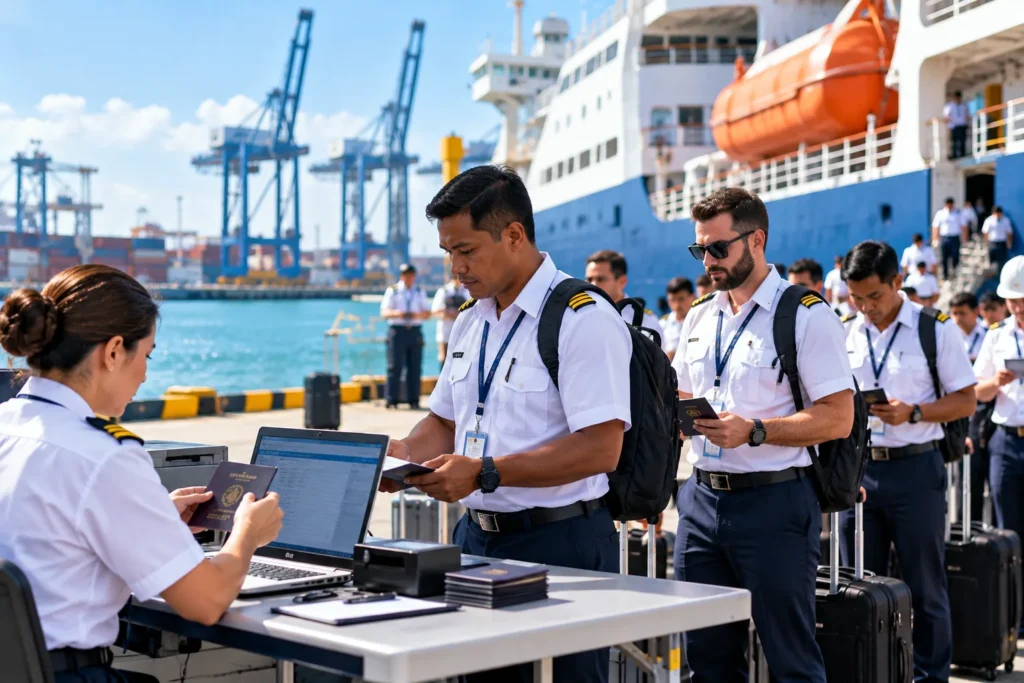
Official industry data shows that specialized visa processing services for maritime crews and offshore personnel have reached a major milestone, exceeding 3,000 completed applications. Designed to serve shipping companies and marine transport enterprises, the mobile visa solution allows international crews operating in foreign ports and territorial waters to complete necessary administrative requirements without leaving their vessels.
Under international maritime frameworks—including the Maritime Labour Convention—shipowners and vessel operators carry legal obligations to secure proper visas, transit documentation, and work authorizations for foreign crew members boarding or disembarking in international ports. The successful expansion of mobile visa processing addresses long-standing operational challenges faced by seafarers who cannot easily visit traditional onshore application centers due to tight port schedules, security regulations, and vessel location constraints.
Regulatory Frameworks Governing Seafarer Travel and Mobility
The movement of international ship crews is governed by rigorous global standards designed to safeguard worker rights while maintaining strict border security protocols. Under international legal frameworks, including the Maritime Labour Convention, shipowners and offshore employers bear primary responsibility for securing necessary entry visas, transit documentation, and labor clearances whenever international crew members board, disembark, or transit through foreign ports and territorial waters.
Despite these established mandates, maritime workers face distinct logisistical obstacles when attempting to complete standard immigration clearance procedures. Traditional visa processing requires applicants to visit physical visa application centers in person to submit original documentation and complete mandatory biometric enrollment, such as digital fingerprints and facial photo capture. For seafarers stationed aboard vessels operating offshore or adhering to tight port turnarounds, traveling to onshore facilities often proves operationally impractical or restricted by port safety protocols.
Operational Deployment of Mobile Visa Solutions at Sea
To address crew mobility constraints without compromising government security standards, specialized mobile visa processing units travel directly to maritime applicants. Initially established in 2019 to provide flexible visa processing at homes and corporate offices for urgent business travel, the service framework was adapted specifically to serve the maritime sector during period of heightened port operational restrictions.
The specialized maritime program operates through direct on-site deployment:
Portside and On-Board Processing: Qualified consular service personnel travel directly to a vessel’s docking berth, enabling crew members to complete document checks and biometric enrollment without leaving the ship.
Offshore Aviation Logistics: In instances where ships remain anchored outside port limits or operate along offshore maritime corridors, service staff are deployed via helicopter directly to vessels at sea to perform official document verification and biometric collection.
Passport Retention Advantages: A major operational benefit of the mobile service is that maritime workers retain possession of their physical passports throughout the evaluation phase, eliminating post-approval waiting periods for passport delivery and avoiding delays to vessel sailing schedules.
This decentralized operational approach ensures full compliance with international identity verification standards while eliminating administrative bottlenecks for shipping lines.
Industry Collaboration and Future Expansion in Maritime Logistics
The development of tailored visa processing mechanisms for offshore personnel emerged from targeted public-private collaboration designed to resolve complex project timelines. Initial deployments supported international offshore initiatives in Northern Europe, specifically assisting shipping operators with high-volume crew mobilizations for Danish entry permissions under strict operational deadlines.
Following initial implementations, ongoing collaboration between maritime legal specialists, professional advisory firms, and official visa processing partners expanded the service model across broader commercial shipping routes and offshore energy projects. Official executive statements from processing authorities highlight that reaching the 3,000-application benchmark underscores strong demand across international shipping lanes and offshore project hubs.
Looking ahead, public sector travel partners and maritime industry stakeholders are moving to integrate mobile processing tools more deeply into global supply chain management. By expanding at-sea visa enrollment access across key international ports, aviation gateways, and maritime corridors, global travel administration continues to adapt to the specialized needs of modern international commerce.
For more travel news like this, keep reading Global Travel Wire