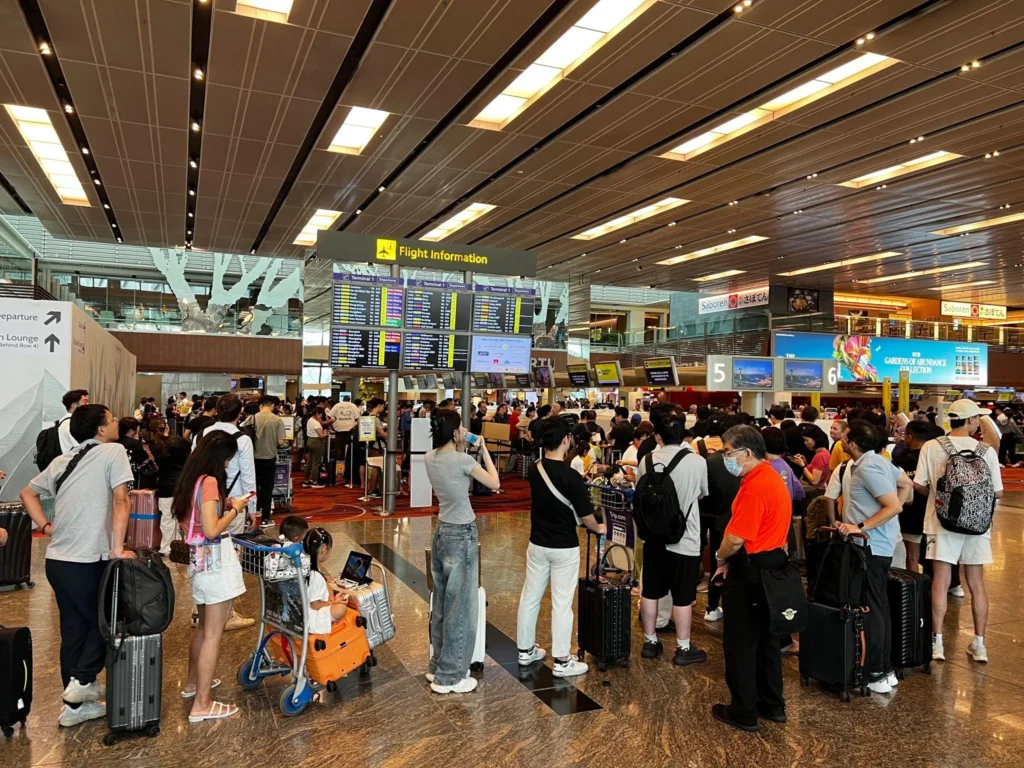
A localized flight disruption at Singapore Changi Airport has emphasized the logistical sensitivities of Southeast Asia’s premier holiday networks. The unexpected grounding of an afternoon Airbus A320 service, programmed for a high-demand route to Denpasar, triggered short-term rebooking challenges for hundreds of international holidaymakers and regional business commuters aiming to reach Bali.
As one of the absolute busiest airline corridors in the territory, the route connecting Singapore Changi Airport and Ngurah Rai International Airport operates under highly optimized schedules. For global travelers utilizing Singapore as a primary transit hub, this operational bottleneck demonstrates how a single narrow-body aircraft delay can create immediate scheduling complications across interconnected regional flight pathways.
Logistical Bottlenecks Impact Peak Afternoon Holiday Transit
The operational disruption materialized when a scheduled afternoon flight, designated as service TNU554, was removed from the departure board during a heavily utilized 02:15 PM travel window. This particular segment is highly valued by long-haul international tourists who land at Changi Airport from Europe, North America, and Australia, relying on rapid, short-haul shuttle connections to reach Bali’s resort destinations before evening check-in windows close.
According to civil aviation operational frameworks, major regional carriers maximize efficiency by operating tight rotation cycles. An Airbus A320 fleet typically undergoes rapid turnaround procedures to execute multiple regional jumps per day. When a mechanical variance, maintenance hold, or crew scheduling delay forces a cancellation, the designated aircraft is instantly removed from its broader multi-leg rotation. This operational breakdown requires immediate intervention from airport ground handlers and airline desk teams to process passenger re-accommodations manually.
Civil aviation statistics from regional transport ministries confirm that high-frequency corridors like the Singapore-Bali route feature immense load factors during the peak summer vacation block. Removing a significant block of seat capacity during peak afternoon hours temporarily strains terminal infrastructure, causing passenger volumes to surge at terminal customer service counters as travelers seek alternative routing options.
Broad Repercussions for Independent and Connecting Travelers
While a single cancellation is manageable within a multi-carrier ecosystem, the impact on independent traveler schedules remains complex. Passengers navigating strict timelines frequently absorb unrecoverable losses relating to pre-booked airport transfers, local destination excursions, and non-refundable villa accommodations across Denpasar, Ubud, and the surrounding islands.
Furthermore, the cascading effect of an outbound cancellation from Singapore means the corresponding return flight from Bali is also compromised. This reverse disruption displaces an equal volume of travelers in Indonesia, potentially causing them to miss long-haul legacy carrier connections departing from Singapore to global western destinations.
The relationship between aircraft availability and route stability is outlined below:
Aviation Component | Immediate Disruption Effect | Long-Term Operational Correction
Narrow-Body Aircraft | Single tail-number grounding halts multi-leg route cycles | Increased reliance on regional standby reserve aircraft
Terminal Operations | Higher foot traffic at customer care desks during peak loops | Shift toward automated, app-based mobile passenger rebooking
Connecting Itineraries | Interrupted multi-leg journeys for international transits | Expansion of recommended layover buffers at major hubs
Destination Logistics | Forfeited resort bookings and pre-arranged island transfers | Rise in consumer adoption of comprehensive travel coverage
Aviation Management Strategies for High-Density Corridors
In statements outlining standard terminal operation guidelines, airport authorities and civil aviation boards emphasize that schedule resilience is the primary defense against localized network stress. While minor individual disruptions do not prompt macro-level regulatory interventions, the Civil Aviation Authority of Singapore and airport terminal operators maintain robust contingency protocols to clear terminal congestion rapidly.
Airline operations teams have verified that their main focus following high-volume corridor disruptions is shifting passengers to alternative evening services or utilizing seat capacity across allied partner networks. Because the corridor between Changi and Denpasar is supported by several low-cost and legacy operators, complete route failure is rare. The operational challenge remains centered on timing adjustments and passenger convenience rather than total isolation.
As post-pandemic passenger volumes continue to outpace historical terminal baseline designs across Southeast Asia, airlines are increasingly turning to advanced data models to manage crew duty times and optimize fleet maintenance. These structural updates aim to insulate core tourist corridors from the sudden cancellations that can arise from compounding ground delays.
Proactive Contingency Planning for Southeast Asian Transit
For international tourists organizing itineraries through major Asian hubs, implementing structured travel buffers has become an essential strategy. Transportation advisories consistently recommend that passengers traveling on high-density holiday routes maintain active notifications on airline mobile applications, which typically provide updated schedule changes prior to terminal flight board refreshes.
Aviation risk management specialists also advise travelers to avoid booking time-sensitive activities on the exact evening of their arrival in destination hubs. Establishing a realistic time buffer allows travelers to absorb unforeseen scheduling changes without experiencing financial or emotional strain.
By maintaining comprehensive travel protection policies that cover trip delays and choosing flexible ticketing options, travelers can successfully navigate the occasional operational friction that accompanies high-frequency air travel, ensuring safe and predictable arrivals at their final global destinations.
For more travel news like this, keep reading Global Travel Wire