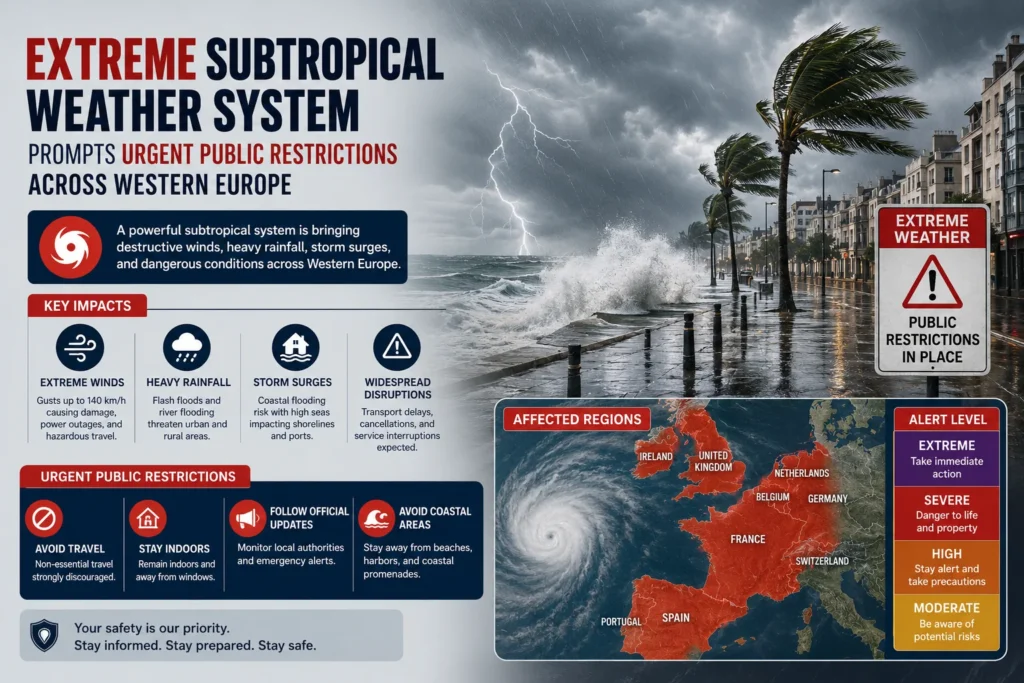
A massive subtropical weather system is generating unprecedented operational adjustments across Western Europe, as a historic summer heatwave forces cities to implement emergency public bans, facility closures, and municipal health mandates. An intense Saharan air mass has effectively trapped extreme thermal energy across the continent. This atmospheric anomaly has compelled official civil protection departments and regional ministries in both France and Spain to activate maximum safety protocols to safeguard incoming international tourists and local populations alike.
The sweeping meteorological event is driven by a powerful African anticyclone pushing scorching air deep into the European interior. Official data released by Spain’s State Meteorological Agency (AEMET) and France’s national weather service, Météo-France, confirm that current ground and atmospheric conditions deviate severely from traditional seasonal baselines. The scale of the thermal duress has shifted the regulatory landscape, forcing local administrative boards to move past basic advisory notices into active legal enforcement regimes to mitigate severe heat-related health emergencies.
Emergency Public Bans and Structural Closures Enforced in France
In France, regional administrators are deploying rigorous measures to manage urban microclimates as thermometers in major southern and central hubs register unprecedented mid-day peaks. In the wine-growing hub of Bordeaux, official weather data recorded daytime highs climbing to 42 degrees Celsius, prompting regional education boards to temporarily suspend classroom activities and shut down local school facilities. The national forecasting office has maintained its highest public danger signaling for multiple adjacent departments, indicating that the thermal plateau is projected to remain locked in place through the upcoming cycle.
Further north, the municipality of Paris has enacted highly targeted administrative orders to navigate localized public safety during seasonal celebrations. To lower the risk of dehydration and heat-induced medical emergencies during large-scale outdoor gatherings like the annual Fête de la Musique, municipal leadership has authorized a strict temporary ban on the consumption of alcohol within public parks and open-air plazas.
Simultaneously, a series of strict modesty and hygiene ordinances have taken effect across a broad network of coastal communes stretching from Arcachon to Deauville. Under these updated municipal codes, local law enforcement agencies have begun issuing immediate fines of up to 150 Euros for any individuals or beachgoers who walk through urban retail districts, historic streets, or municipal areas away from the immediate shoreline without a shirt. Local governments state these measures are essential for maintaining strict public hygiene and community decorum during the peak of the environmental crisis.
Red Alerts and Hydration Infrastructure Deployment Across Spain
The environmental situation across the Iberian Peninsula mirrors the intensity observed in France, with 13 of Spain’s 17 autonomous communities placed under official orange weather alerts by national safety coordinators. The logistical challenge is currently most acute across the northern Basque Country, where emergency services escalated the warning system to a comprehensive red alert after persistent ground temperatures surged past the 40-degree Celsius threshold.
National tourism ministries and transit departments have issued joint advisories cautioning international self-drive tourists that long-distance road travel and unshaded outdoor excursions are currently highly hazardous. In a direct bid to support high-traffic tourist zones, public health departments have systematically deployed localized hydration networks across major historical centers. Emergency medical squads have also been strategically stationed near prominent landmarks—such as the major monuments of Madrid and Andalusia—to deliver rapid intervention to visitors experiencing thermal exhaustion.
Institutional Adaptation Across Major Central European Transit Centers
The operational reach of the Saharan air mass has expanded beyond the immediate Mediterranean coastline, influencing major transport hubs and cultural networks across Italy, Belgium, and Germany. While international flight corridors and rail timetables remain largely operational, civil infrastructure managers are implementing real-time modifications to protect daily commuters and transit passengers. These efforts include the maximum deployment of auxiliary cooling systems within high-density airport terminals and underground railway junctions.
The cultural tourism sector is undergoing an operational evolution to adapt to these shifting climate realities. Numerous world-class art galleries, state museums, and historical heritage sites have officially extended their evening operating hours. By pushing gate access well into the night, curators are actively allowing international travelers to navigate major exhibits during cooler twilight windows, completely avoiding the intense thermal risks associated with midday sun exposure.
As global weather patterns continue to manifest extreme seasonal variances, national tourism boards emphasize that flexibility has become the primary component of successful itinerary management. International travelers are strongly encouraged to utilize official government mobile portals and real-time civil protection apps to monitor localized legal restrictions and temperature alerts before departing for their destinations.
For more travel news like this, keep reading Global Travel Wire