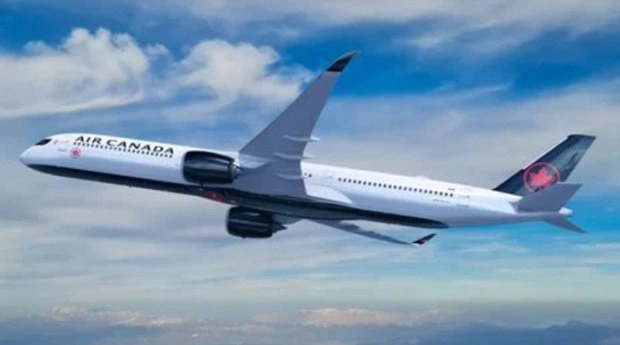
Air Canada’s Airbus A350-1000 order is opening a new chapter for Canada–Australia travel, with Melbourne emerging as a potential future beneficiary of the airline’s expanded ultra-long-haul capability. The carrier has not announced a nonstop Melbourne route, but its fleet strategy creates new possibilities for destinations that are difficult to serve efficiently with existing aircraft.
Air Canada has confirmed an order for eight Airbus A350-1000 aircraft and holds purchase rights for eight more. Deliveries are scheduled to begin in the second half of 2030. The aircraft has a potential range of approximately 9,000 nautical miles, giving the airline additional flexibility for long-distance markets across Australia, Southeast Asia and the Indian subcontinent.
For travellers, the development matters because Air Canada currently promotes year-round nonstop flights from Sydney and Brisbane to Vancouver. A future Melbourne service would add another major Australian gateway, improving access for leisure visitors, business travellers and passengers visiting friends and relatives.
Melbourne Could Gain From New Aircraft Capability
Melbourne is one of Australia’s most important tourism and business destinations. Its appeal extends from city-based experiences, dining and major events to regional journeys across Victoria, including coastal drives, wildlife attractions and wine regions.
However, the airline has made no route announcement for Melbourne. Any future nonstop service would depend on commercial demand, operating conditions, aircraft availability and network priorities. The A350-1000 simply gives Air Canada a stronger platform for evaluating long-distance opportunities that may have been more challenging with earlier aircraft.
That distinction is important for travellers planning future journeys. Melbourne is already available through connecting itineraries, while Air Canada’s nonstop Australia network remains focused on Sydney and Brisbane from Vancouver.
A350-1000 Adds Range, Payload and Comfort
The A350-1000 is designed for long-haul flying and brings a combination of range, payload capability and operating economics. Air Canada has said the aircraft will add a new dimension to its international network and support a more resilient, diversified fleet.
The aircraft is also expected to improve the passenger experience on extended journeys. Its cabin is designed with lower noise levels and a lower cabin altitude, while Air Canada plans to introduce its next-generation cabin standard, enhanced connectivity and updated in-flight entertainment.
Efficiency is another major factor. The aircraft is expected to reduce fuel consumption by up to 25 per cent compared with previous-generation aircraft. That can support route economics on lengthy sectors where fuel burn, cargo capacity and payload flexibility are critical considerations.
Australia Travel Demand Supports Long-Term Growth
Official Australian tourism data has identified Canada as an important visitor market, with holiday travel and visits to friends and relatives accounting for most Canadian trips to Australia. Canada was forecast to return to pre-pandemic visitor levels in 2026.
Additional air access can generate benefits far beyond airports. More capacity can support hotels, attractions, restaurants, tour operators, conference venues and regional tourism businesses. A Melbourne nonstop route, should it eventually be launched, could create easier access to destinations across Victoria and strengthen opportunities for multi-stop Australian itineraries.
Cargo will remain part of the equation. Long-distance passenger aircraft also carry freight, and enhanced payload capability can improve the commercial strength of routes where both visitor demand and trade links matter.
Fleet Modernisation Shapes the Next Decade
The A350-1000 order forms part of a wider Air Canada fleet renewal programme. The airline has also confirmed 14 Boeing 787-10 Dreamliners and 30 Airbus A321XLR aircraft, creating a broader mix of aircraft for different market needs.
The 787-10 is expected to support markets where capacity and customer demand are important, while the A321XLR will add flexibility on longer narrowbody routes. The A350-1000 will sit at the top of the fleet as a platform for the airline’s longest missions.
Melbourne is not yet confirmed as part of that future map. Still, Air Canada’s investment signals that Canada–Australia travel could enter a more flexible era after 2030. For tourism operators and travellers, the key development is clear: the airline will have a new aircraft capable of widening the conversation around nonstop connectivity between Canada and Australia.
For more travel news like this, keep reading Global Travel Wire