The Asia-Pacific travel sector is experiencing a significant structural shift as international route networks expand and passenger volumes return to record levels. At the center of this momentum is the South Korea aviation recovery, spearheaded by the nation’s premier full-service carriers, Korean Air and Asiana Airlines, alongside an increasingly competitive low-cost carrier segment. Backed by stable operational infrastructure and highly favorable currency conditions across key regional corridors, South Korean airlines are rapidly converting this period of stability into historic growth, transforming the regional tourism ecosystem.
According to the Ministry of Land, Infrastructure and Transport (MOLIT), flight frequencies and seat capacities across Northeast and Southeast Asia have steadily risen. This capacity influx aligns perfectly with a broader economic stabilization across the global aviation market, where more predictable operating costs allow airlines to optimize their international schedules. Instead of relying on short-term promotional discounts, major carriers are passing structural efficiencies down to the consumer, unlocking affordable long-haul and short-haul international travel paths for millions of holidaymakers.
Corporate Integration And Fleet Optimization Drive Network Growth
The structural transformation of the South Korean aviation market is heavily anchored by the impending consolidation of its two largest aviation brands. The boards of directors for both Korean Air and Asiana Airlines have finalized their formal integration framework, set to conclude under a unified Air Operator Certificate supervised directly by the Ministry of Land, Infrastructure and Transport. This historic merger will establish a top-ten global megahub network centered at Incheon International Airport, operating a combined mainline fleet of approximately 248 aircraft.
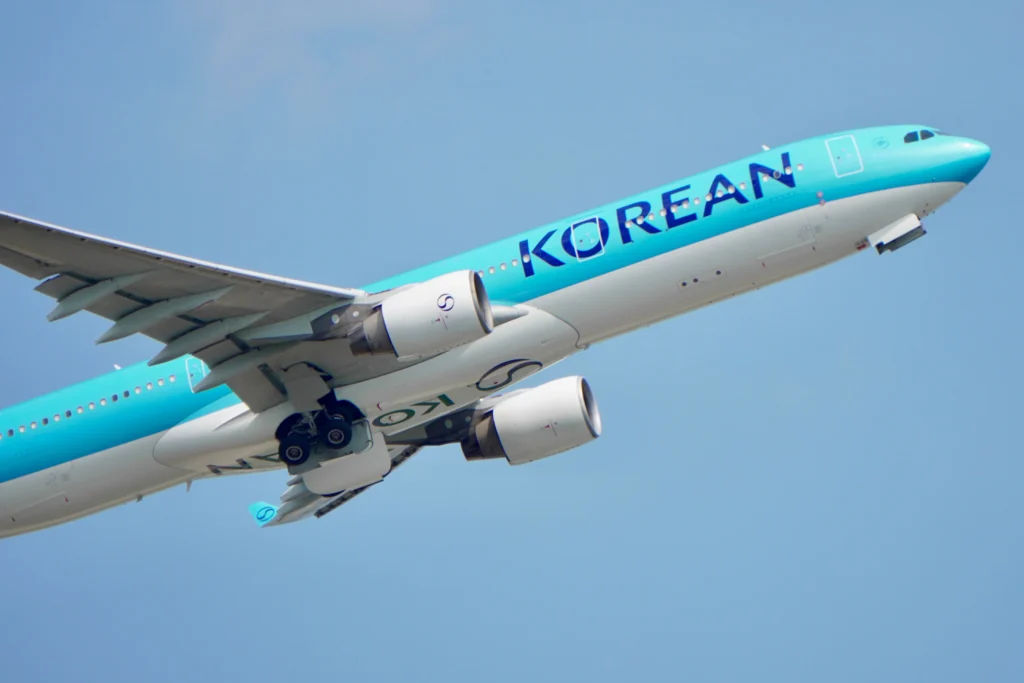
By eliminating historical route redundancies on high-demand, long-haul corridors to North America and Europe, the integrated carrier is unlocking massive operational efficiencies. Korean Air has systematically deployed fuel-efficient, next-generation aircraft—such as the Boeing 787 and Airbus A350 series—enabling the airline to increase flight frequencies to premium cultural hubs and leisure destinations. This strategic consolidation ensures that the combined carrier can capture highly lucrative business travel segments while maintaining competitive, dynamic pricing models for price-sensitive vacationers.
Simultaneously, the regional low-cost carrier market is undergoing an unprecedented renaissance. Budget operators like Eastar Jet and Jeju Air are leading the industry in passenger volume growth. Official operational data from Jeju Air reveals that the carrier has successfully surpassed one million monthly passengers for consecutive months, maintaining a highly efficient average load factor of 88.2 percent across its entire short-haul network. By adding multiple high-frequency round-trip flights to secondary cities across Japan, Taiwan, and China, budget carriers are opening up accessible travel entry points for first-time international flyers throughout the region.
Regional Tourism Ecosystem Expands Rapidly Across Peak Holiday Seasons
The cascading effect of increased flight availability is sending positive shockwaves through international tourism boards. Government tourism authorities in premier destinations—including Thailand, Vietnam, Japan, France, and Italy—are reporting substantial booking momentum heading into the peak summer and winter holiday travel windows. The expansion of secondary airport connectivity has altered traditional traveler demographics, drawing large numbers of visitors from emerging travel markets like India and Indonesia into the global vacation pool.
Aviation tracking metrics from Incheon International Airport Corporation highlight the scale of this international surge, with first-quarter passenger traffic reaching 15.9 million travelers, representing an 18 percent increase compared to the same period in the prior fiscal year. This sustained volume confirms that passenger confidence has completely stabilized, reinforced by visible fare reductions, smooth airport processing timelines, and highly predictable flight schedules.
Public-Private Initiatives Cement Long-Term Operational Resiliency
To safeguard this growth trajectory, the South Korean government and regional aviation ministries are introducing robust public policies designed to institutionalize long-term stability. The Ministry of Land, Infrastructure and Transport maintains strict regulatory oversight over quarterly fuel surcharge reference tables under established national transport notices, protecting consumers from sudden retail price volatility.
Furthermore, the state is actively executing its comprehensive Sustainable Aviation Fuel (SAF) Expansion Strategy. Under this national eco-tourism framework, domestic carriers—including Korean Air, Asiana, and Eastar Jet—regularly participate in commercial refueling operations using certified waste-based biomass feedstocks on prominent international routes. By combining advanced fleet integration, strict consumer protection policies, and pioneering environmental initiatives, the South Korean aviation sector is setting an institutional blueprint for resilient, scalable, and highly accessible international tourism.
For more travel news like this, keep reading Global Travel Wire