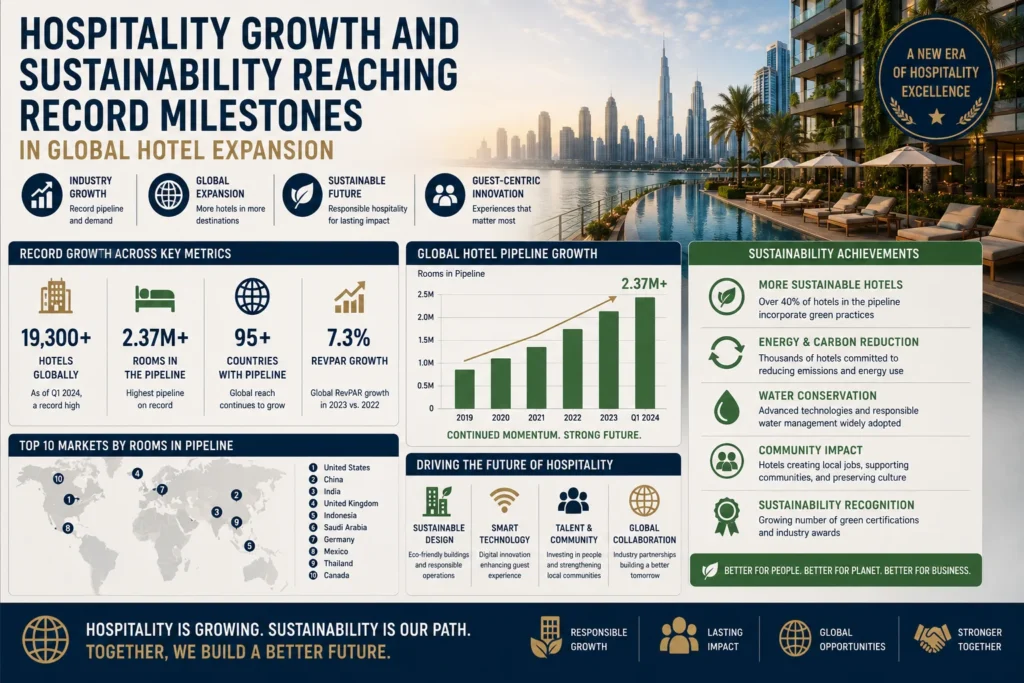
The international travel sector is experiencing an unprecedented structural surge, with prominent lodging brands reporting historic operational performance aligned with the complete normalization of worldwide passenger traffic. Verified annual performance reviews from global tourism boards and enterprise databases demonstrate that consumer demand has successfully scaled past pre-conflict baselines. According to official data compiled by UN Tourism, total international traveler volume reached an unprecedented 1.52 billion arrivals globally, yielding a consistent year-on-year market expansion that directly underpins the fiscal health of premier resort portfolios.
Amid this favorable operating environment, prominent enterprise entities like the Barceló Hotel Group have solidified their corporate footprint by establishing new high-water marks in annual turnover. Official audited sheets show that the group generated record-breaking operational revenues exceeding 7.867 billion euros, representing a stable four percent baseline increase. This performance yielded a net profit of 313.4 million euros and boosted gross operating metrics, with the group’s reported EBITDA climbing past 676 million euros. Backed by excellent cash generation, the organization completely erased its net financial debt, positioning its corporate treasury to aggressively pursue deep asset investments over the current fiscal cycle.
Massive Capital Injections Drive Portfolio Re-engineering and Asset Acquisitions
The current market environment has opened direct paths for strategic property development across highly competitive geographic sectors. To fully capitalize on changing consumer flight paths and luxury vacation preferences, corporate boards have authorized a dedicated investment fund of approximately 350 million euros targeted explicitly for asset deployment. This multi-million-euro capital roadmap will prioritize the selective purchase, structural renovation, and premium repositioning of key metropolitan and coastal assets, ensuring the brand maintains a premium competitive status in primary international gateways.
This focused investment strategy directly follows an intensive period of physical network scaling. Over the recent twelve-month monitoring period, the group successfully integrated thirty-three new boutique and resort properties into its operational network. These international expansion efforts featured high-profile asset purchases and management takeovers across iconic leisure landscapes, including:
Established Travel Hub Expansion: Consolidating long-term market share through strategic property takeovers and premium upgrades in established regions such as Mexico, Italy, France, and Morocco.
Emerging Market Alignments: Actively diversifying the global portfolio by launching high-end accommodations in new territory zones, including Cape Verde, Portugal, the Maldives, Dubai, and Bahrain.
These targeted property configurations ensure that as long-haul transit networks completely re-stabilize, premium lodging capacity is structurally optimized to absorb high-yield international corporate delegates and luxury leisure arrivals.
Institutional Leadership Refinements and Generational Transition
The historic financial performance matches a comprehensive restructuring of the group’s internal corporate governance framework. To ensure long-term stability and a seamless management transition, the executive board of Barceló Corporación Empresarial completed major leadership reallocations. Under the newly ratified operational hierarchy, the board accepted the formal resignation of Simón Barceló Tous from his previous day-to-day administrative role, though he will continue providing strategic direction as institutional Co-Chairman.
Concurrently, Simón Pedro Barceló has been formally appointed as the sole Managing Director of the overarching parent enterprise corporation, centralizing the brand’s long-term commercial vision. Additional leadership updates include the integration of next-generation corporate leaders into the core executive committee, highlighted by the strategic designation of Marta D. Barceló Fontirroig as the active President of Crestline Hotels & Resorts, and Antonio Tovar Barceló assuming the responsibilities of Chief Executive Officer for the Latin American business theater.
Pioneering Local Economies Through Regenerative Tourism Frameworks
Beyond traditional commercial scalability, the international lodging sector is experiencing a profound shift toward environmental accountability. Through the formalized deployment of the “Barceló Regen” corporate sustainability manifesto, the group has successfully transitioned from standard conservation protocols toward a completely regenerative operating model. This framework prioritizes the cultural and material health of host destinations by ensuring that hotel presence directly strengthens localized business networks.
Operational audits from the past fiscal year show that eighty-eight percent of all active hotel suppliers were kept within domestic borders. Furthermore, forty-four percent of all aggregate food and beverage procurement was focused exclusively on locally sourced products. This localized supply architecture acts as an immediate economic multiplier for rural agricultural groups while dramatically lowering the carbon footprint associated with long-range logistics.
These measurable supply chain successes are coupled with substantial social investments, including more than 1.7 million euros directed toward independent non-profit associations and over 3 million euros in targeted community funding distributed via the Barceló Foundation. This performance matrix is structurally verified by the Global Sustainable Tourism Council, which has officially initiated the independent certification of individual properties across Europe and the Americas, setting a definitive baseline for the future of responsible global hospitality.
For more travel news like this, keep reading Global Travel Wire