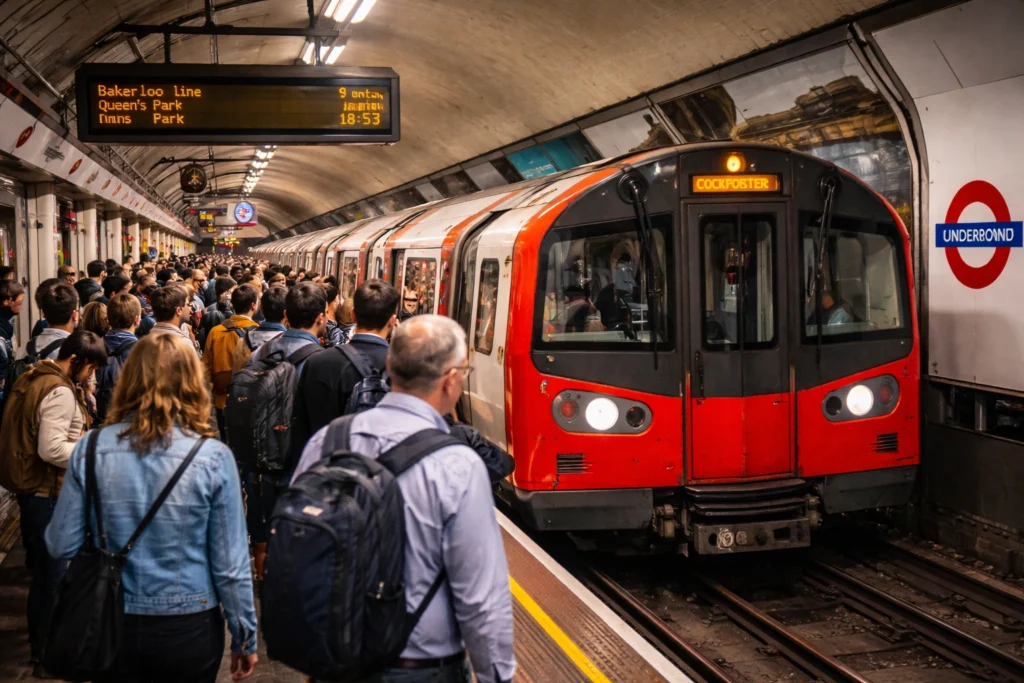
London is preparing for major transport disruption as London Underground drivers are set to stage 24-hour strikes on April 21 and April 23, 2026, creating serious challenges for commuters, tourists and business travelers across the capital. The industrial action is expected to affect Tube services citywide, with delays and reduced operations likely to continue beyond the official strike windows.
The planned stoppages come during a busy travel period for London, when domestic visitors, international tourists and weekday commuters rely heavily on the Underground network to move between hotels, attractions, offices and airports. With alternative services expected to become crowded, travelers are being urged to plan ahead.
Strike Dates and Expected Disruption
The strikes are scheduled to begin at noon on both April 21 and April 23 and continue until noon the following day. However, the impact is likely to extend well beyond those hours as trains, staff rosters and depot operations take time to return to normal.
Some of the busiest lines are expected to face the greatest pressure, particularly routes that carry high volumes of commuters and visitors through central London. Even where services continue, frequencies may be lower and stations busier than usual.
Why the Strike Is Happening
The dispute centers on proposed working arrangements, with union representatives opposing changes they say would affect staff conditions. Transport for London has argued that reforms are intended to improve reliability and flexibility while managing costs.
Industrial action on a network as large as the Underground often creates citywide effects because the Tube is deeply integrated with London’s economy and visitor experience. When services slow, the impact reaches far beyond stations and platforms.
Tourists Face Challenges Reaching Top Attractions
For visitors, the strike could complicate access to major landmarks such as the British Museum, Buckingham Palace, Tower of London, West End theatres and shopping districts. Many tourists depend on the Tube because it is fast, familiar and connected to nearly every part of the city.
Delays or closures may force visitors to rethink itineraries, allow more travel time or rely on unfamiliar alternatives. Hotels and tour operators may also need to assist guests with revised travel advice during the disruption period.
Business Travel and Airport Connections Affected
Business travelers are also likely to feel the strain. Missed meetings, longer cross-city journeys and pressure on airport routes can create costly delays for professionals with tight schedules.
London’s status as a global business hub means transport reliability matters enormously. When Tube operations are reduced, demand often shifts to taxis, rail links and buses, increasing congestion and travel times across the city.
Bus Strike Adds More Pressure
The disruption may intensify further with a separate 24-hour strike affecting some Stagecoach-operated bus routes on April 24. If bus availability is reduced immediately after Tube strikes, Londoners and visitors could face several consecutive days of difficult journeys.
Other networks such as the Elizabeth line, DLR and London Overground are expected to continue running, but these services may become exceptionally busy as displaced Tube passengers seek alternatives.
Best Travel Options During the Strike
Travelers in London should check live service updates before leaving, as conditions can change quickly. Building extra time into journeys is strongly recommended, especially for airport transfers, theatre bookings or timed attraction tickets.
Walking and cycling may be practical options for shorter city-center trips. London’s dense central districts often make walking between attractions easier than many visitors expect. For longer journeys, combining rail, buses and rideshare services may reduce disruption.
What This Means for London Tourism
Large-scale transport strikes can temporarily affect visitor confidence, especially among first-time tourists unfamiliar with the city. However, London’s tourism sector is highly resilient and supported by multiple transport modes, strong digital travel tools and extensive hospitality infrastructure.
Many travelers still proceed with trips when they have clear guidance and realistic expectations. Attractions, hotels and travel providers often adapt quickly by sharing alternate route information and flexible timing advice.
Outlook for Travelers
The coming week will require patience and planning for anyone moving around the capital. Travelers should monitor official updates, depart earlier than usual and remain flexible with schedules.
While the strikes will create disruption, London remains fully open for business and tourism. With preparation and smart route choices, visitors and residents can still navigate one of the world’s busiest cities during a challenging travel week.
For more travel news like this, keep reading Global Travel Wire