The international music sector is witnessing unprecedented growth in the Far East, with mainland China solidifying its position as one of the most commercially significant music markets on the globe. Official industry reports demonstrate that China is now the world’s fourth-largest music market, displaying double-digit year-on-year growth that easily outpaces other major global territories.
This rapid expansion is mirrored in the domestic live performance sector. According to official data from the China Association of Performing Arts, annual box office revenues for live events have soared past 10 billion RMB (approximately 1.39 billion USD), drawing hundreds of overseas musicians, bands, and theatrical ensembles to stadiums and concert halls across the country.
Yet, while global pop icons and major stadium acts routinely pack massive arenas in major cities like Shanghai, Guangzhou, and Hangzhou, a different reality exists for the wider independent music scene. For mid-tier touring acts, electronic music producers, and international club DJs, navigating the complex administrative, legal, and financial pathways required to perform in mainland China presents a significant operational hurdle.
The Five-Stage Administrative Journey for Foreign Performers
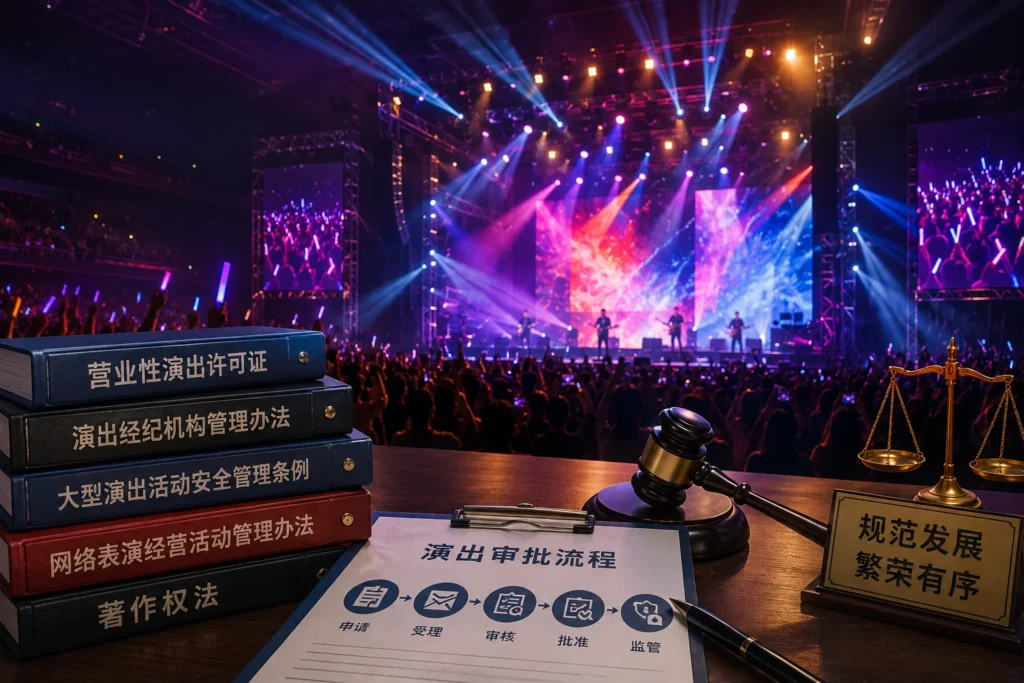
Under the official guidelines established by China’s Ministry of Culture and Tourism, any overseas artist seeking to put on a commercial performance in the country must navigate a multi-layered regulatory approval process. To legally perform a paid gig, a foreign artist and their hosting entity must complete five distinct administrative stages.
First, a licensed Chinese performance agency, venue, or local promoter must officially sponsor the tour. The promoter must then submit the proposed concert details, including the specific venue, date, comprehensive setlists, and lyric translations, to the regional cultural administrative departments for strict review.
Concurrently, a Z visa (work visa) must be secured for the performing artist and every accompanying crew member, a process that requires obtaining a “Notification Letter of Foreigner’s Work Permit” from the State Administration of Foreign Experts Affairs. Finally, the tour must clear detailed logistics and customs declarations for all musical instruments and production gear entering the country.
High Stakes and Financial Barriers for Independent Promoters
This rigorous compliance framework demands a high level of administrative precision. Because the commercial performance approval is venue-specific, date-specific, and lineup-specific, any sudden modification to a tour itinerary—such as a flight delay forcing a venue change—can require the hosting promoter to completely restart the application process.
For major international promoters backing stadium-level tours, these administrative procedures are a manageable cost of doing business. Large-scale agencies possess the legal infrastructure, government relations, and financial capital necessary to absorb potential losses or processing delays. However, for independent promoters and smaller boutique venues operating within China’s underground electronic, jazz, and indie rock scenes, the financial risks can be prohibitive.
Securing the necessary permits often takes between four to eight weeks, and individual visa fees can easily range from $500 to $1,200 USD per team member. If a performance takes place without completing every required step, the legal penalties are severe. Under national exit-entry administration laws, organizing or participating in unauthorized commercial entertainment activities can result in fines of up to 50,000 RMB per person for the participants, alongside administrative fines for the host venues and potential future entry restrictions for the artists.
Navigating the Geopolitical Currents of Cultural Exchange
Even when local promoters successfully clear every legal and financial hurdle, the international live performance sector remains uniquely sensitive to broader foreign policy dynamics. Because cultural exchange programs exist downstream of global diplomacy, sudden shifts in bilateral relations can immediately impact scheduled tours.
Over the years, cultural administrative departments have adjusted performance approvals in response to geopolitical developments. When diplomatic tensions arise between China and other nations, scheduled performances by artists from those regions have occasionally faced sudden cancellations or indefinite postponements.
For global booking agents and international touring managers, this element of uncertainty represents a unique challenge. Because a finalized performance approval functions as a conditional permission rather than an absolute guarantee, some overseas artists remain hesitant to commit to multi-city tours, fearing sudden cancellations after investing heavily in non-refundable flights and logistics.
The Resilient Rise of Domestic Music Communities
Faced with these complex logistical realities, major municipal entertainment hubs like Shanghai have adapted by fostering incredibly robust, self-sustaining local music ecosystems. While the weekly calendars of local nightlife venues feature fewer international headliners compared to other major global cities, the domestic creative scene has stepped up to fill the void.
Local music communities, independent labels, and cutting-edge clubs have built a highly successful, world-class circuit powered almost entirely by domestic talent. This focus on localized curation has not only insulated venues from the financial risks of international booking cancellations but has also accelerated the growth of a highly distinct, uniquely Chinese electronic and indie music identity.
As China’s Ministry of Culture and Tourism continues to refine its digital application portals to streamline administrative workflows for commercial performances, the industry remains hopeful for a more accessible future. For now, the brands, promoters, and artists who successfully master this intricate regulatory landscape will continue to reap the rewards of performing in one of the most dynamic, passionate, and lucrative live music markets in the world.
For more travel news like this, keep reading Global Travel Wire